
Living Room, Private Client, London
A private living room commission for a residence in Richmond, where the garden beyond the window is as much a part of the design as anything inside it. The brief was to create a space that felt genuinely connected to the English landscape while drawing equally from the Japanese tradition of rooms that breathe, pause, and restore. A room in full conversation with where it sits.
Richmond occupies a rare position in London. It is a place where the city releases its grip gradually, where garden walls give way to meadows, and the Thames moves through willows without urgency. This living room was designed to belong to that landscape as much as to the house that contains it.
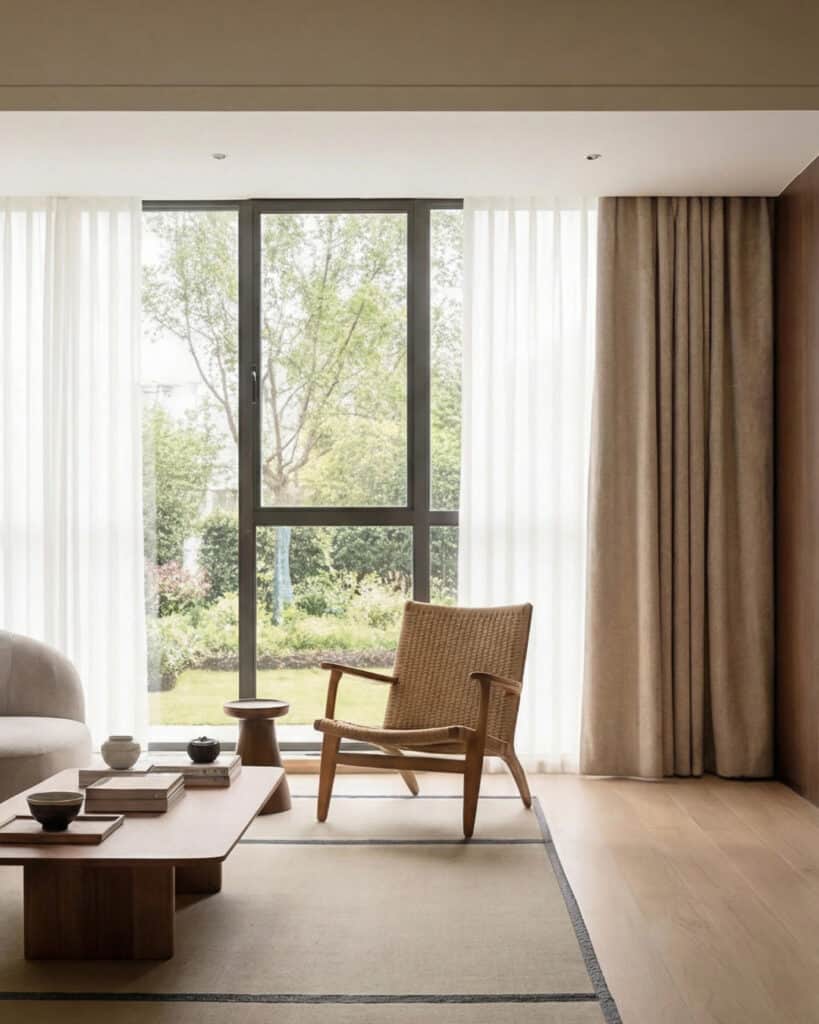
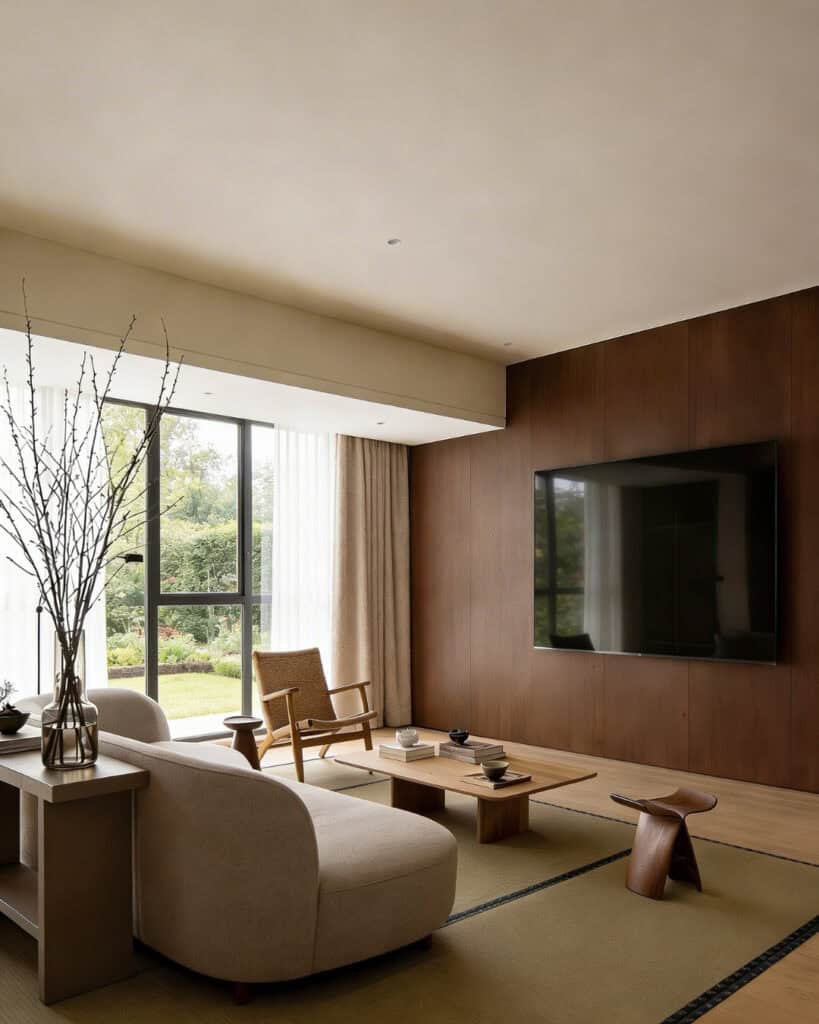
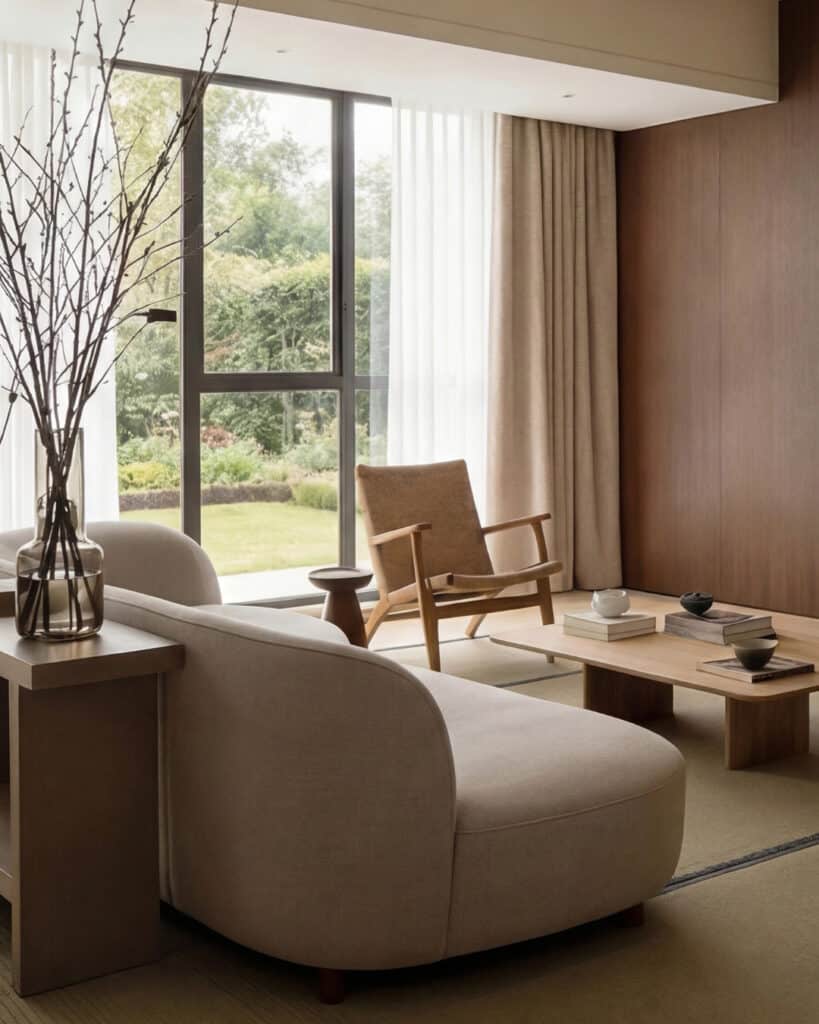
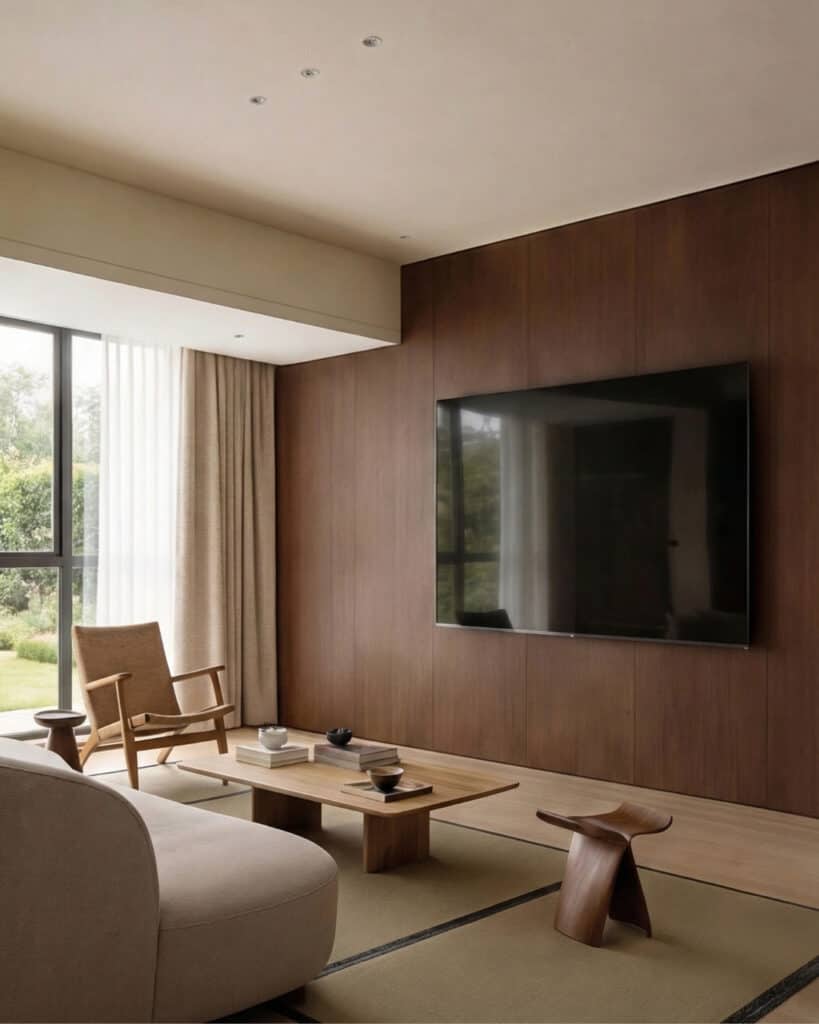
The full-height glazed wall facing the garden is the room’s greatest asset and its most important design decision. Rather than treating it as a backdrop, every element in the room was positioned and scaled to frame it, defer to it, and allow it to be present at all times. The sheer linen panels on either side do not obscure the view but soften the transition between interior and exterior, their gentle movement in a draught the room’s most living detail. When the garden is green, and the light falls through those panels, the room feels like an extension of the outside world rather than a retreat from it.
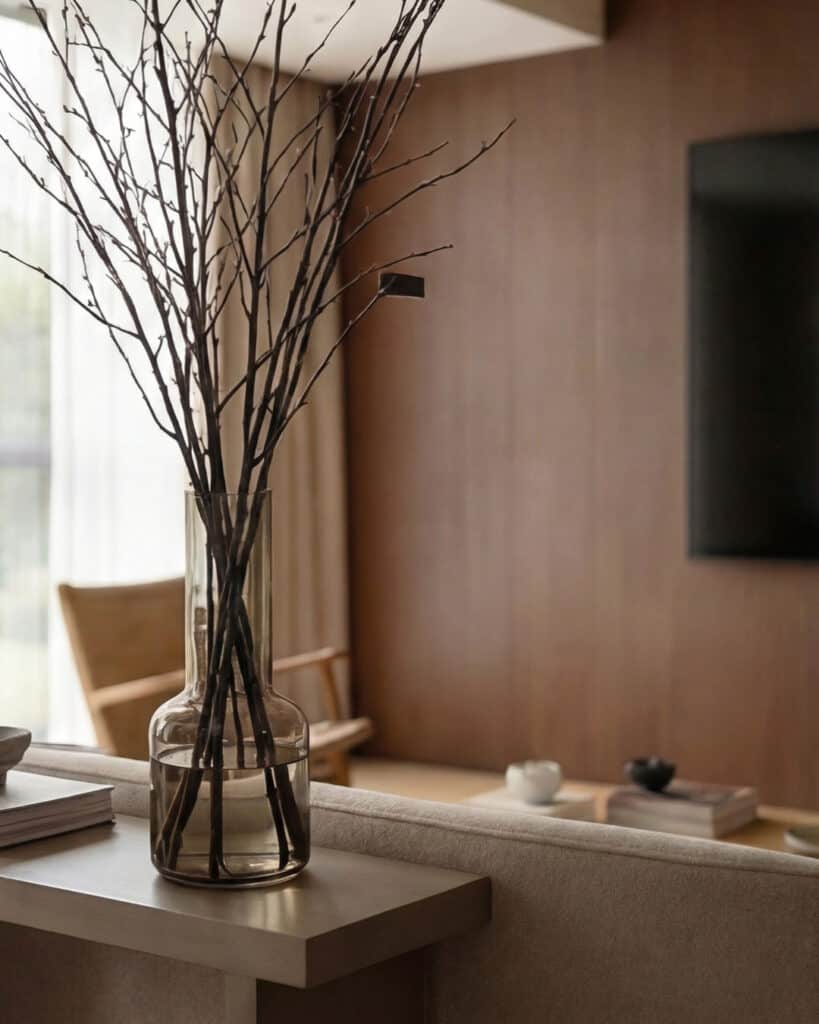
The back wall is clad in flush warm walnut panels, their horizontal grain running the full width in a single continuous surface. No joints, no decoration, no interruption. Against the garden’s natural complexity, this wall offers complete calm, and the screen mounted upon it disappears into the timber when not in use. It is the kind of decision that takes courage in a client and conviction in a designer, and the result justifies both.
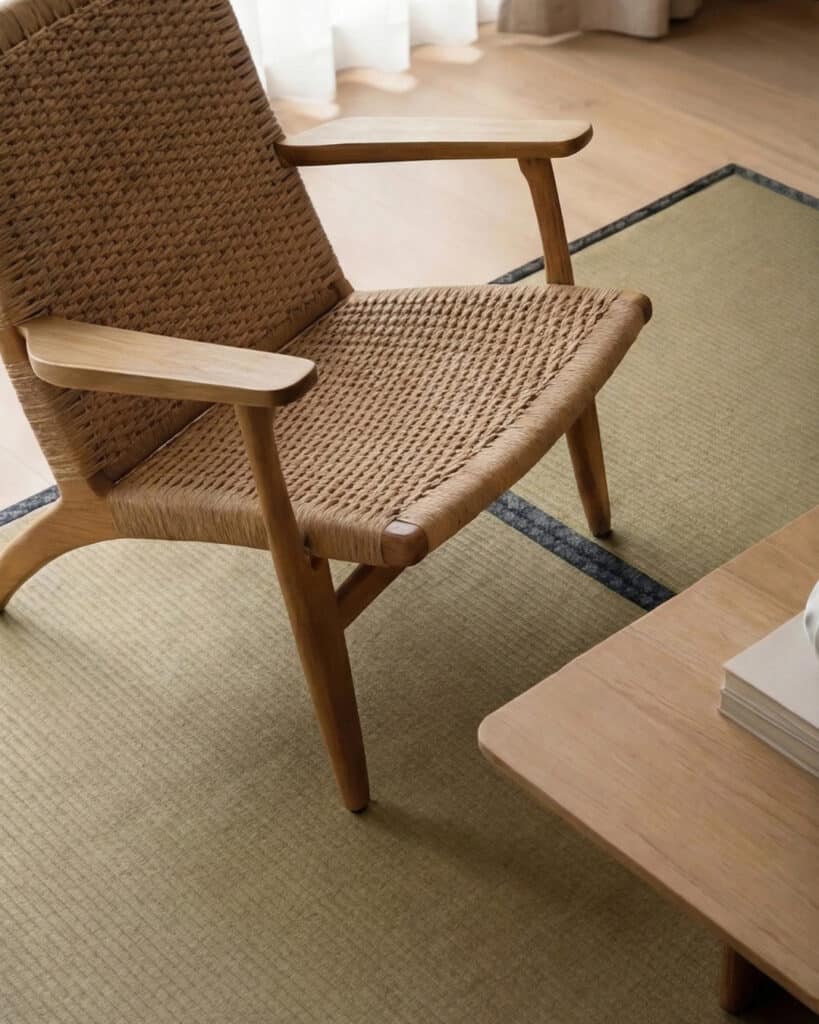
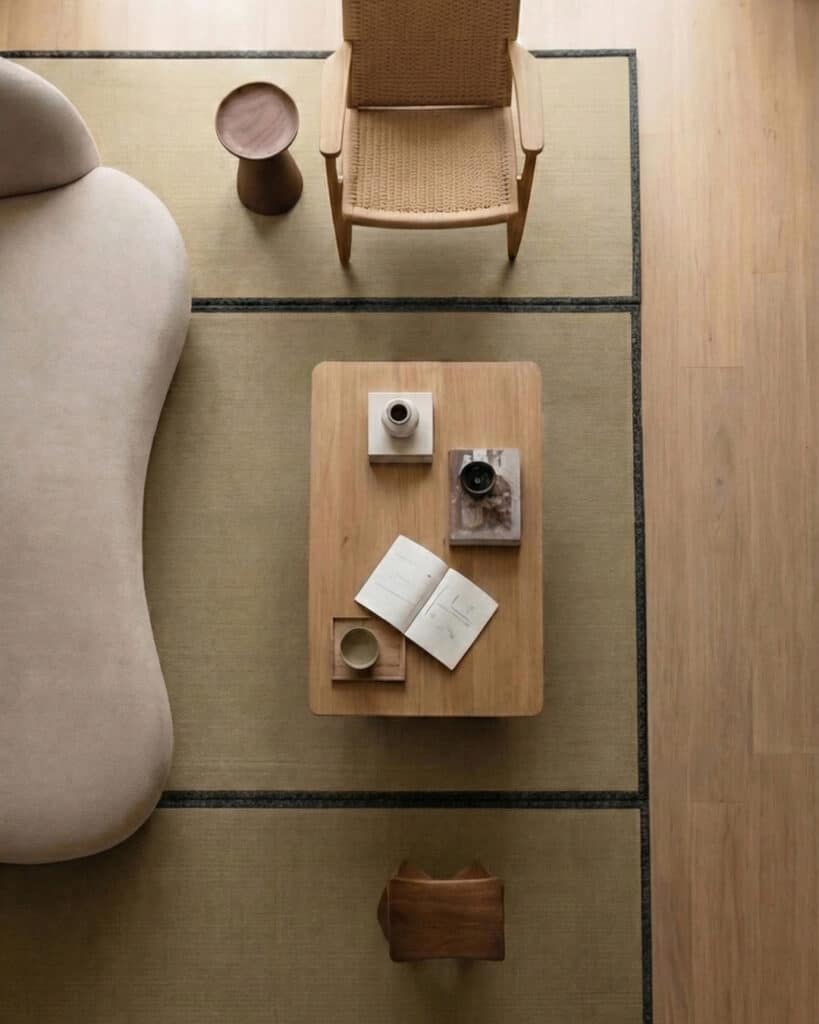
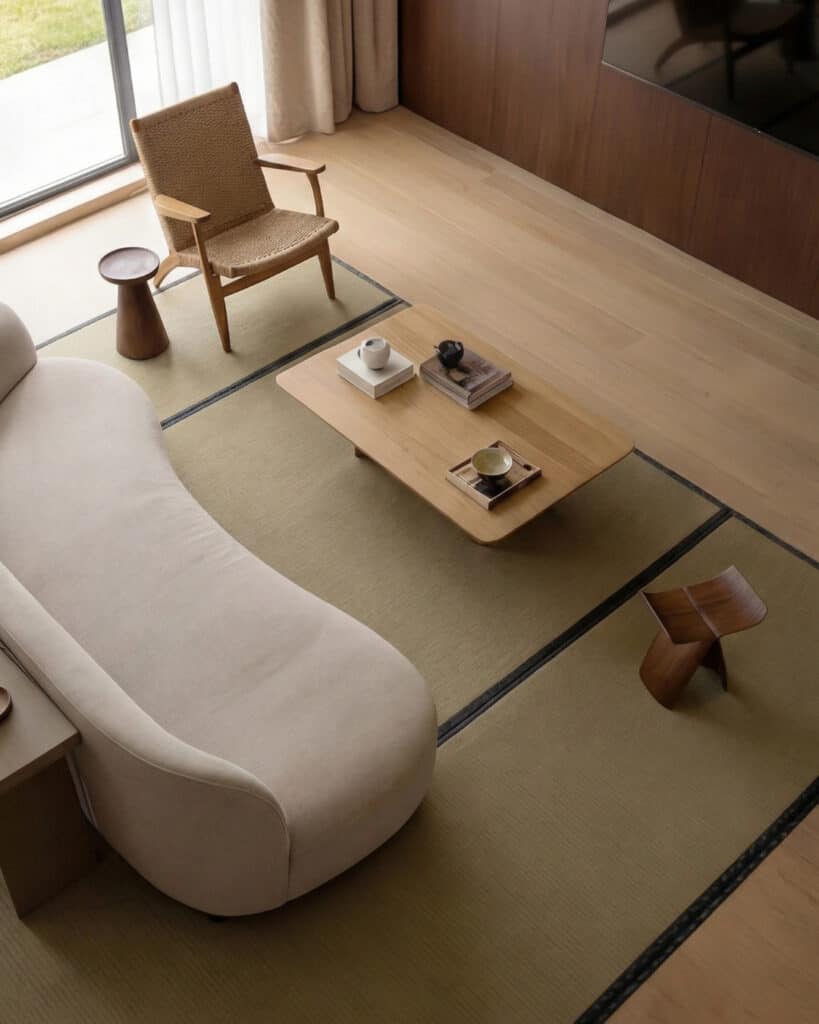
The floor is where the room makes its most specifically Japanese statement. A large tatami-style mat in pale sage green with dark indigo border detailing defines the seating zone with the quiet authority of a room within a room. Its woven surface carries the scent and texture of natural rush, and every piece of furniture placed upon it seems to settle more deliberately, more honestly, for the contact. It is the single detail that most clearly signals the room’s philosophical roots.
The sofa is a sculptural piece in warm off-white bouclé, its rounded organic form low and generous. Beside it, a slim console table in pale stone carries a tall smoked glass vase holding a generous arrangement of bare dark branches, their silhouette echoing the trees visible through the glazing behind. It is a detail of extraordinary simplicity that connects the inside to the outside without sentimentality.
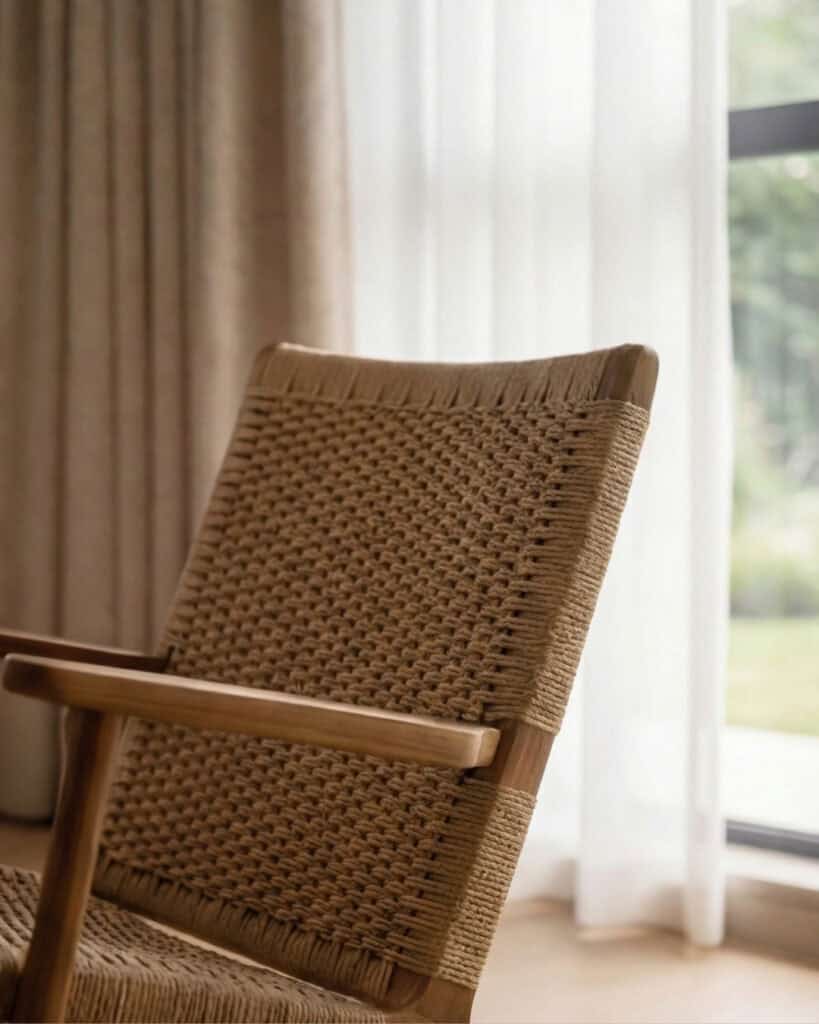
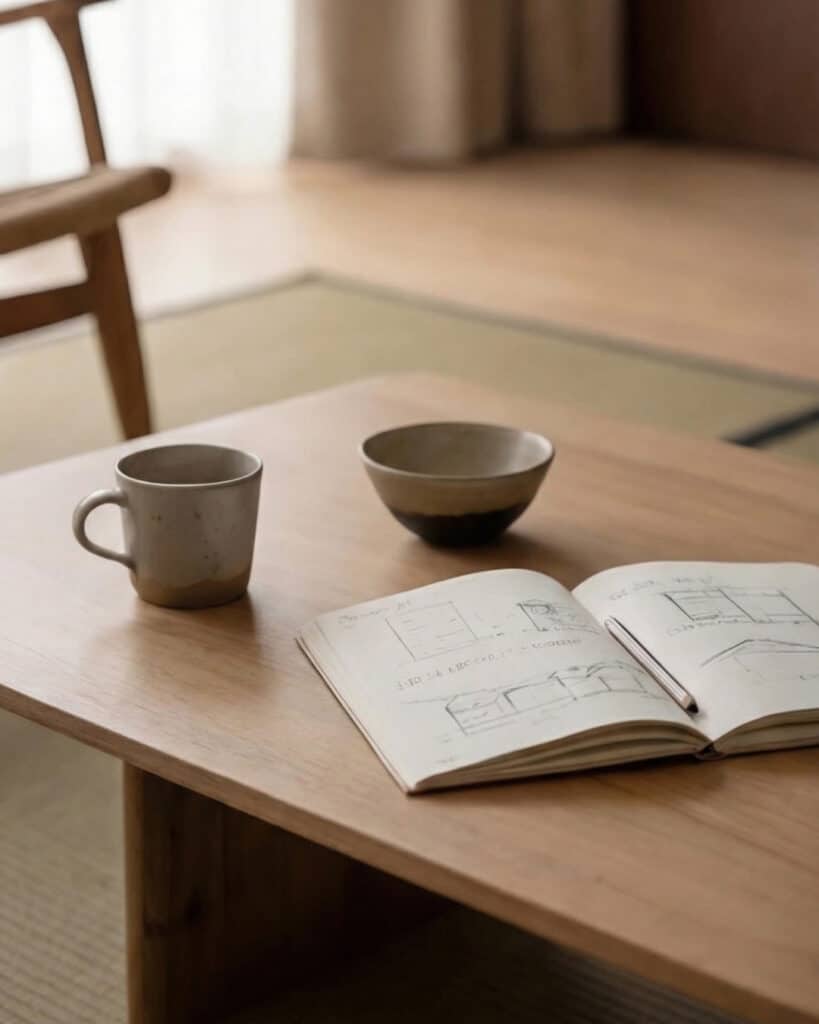
The coffee table is a low rectangular form in natural oak, its legs raised just enough to give it lightness while keeping the whole composition grounded. On its surface, an open notebook, a matte stoneware mug, and a small dark ceramic bowl. The objects of a morning spent thinking slowly. On one side, a small turned walnut side table carries a single ceramic object. On the other hand, a woven paper cord chair in natural oak — unmistakably Scandinavian in its craft, unmistakably Japandi in its context — faces the garden with the ease of something that has always been exactly there.
Beside the sofa, a small sculptural walnut stool in a carved organic form sits at the edge of the tatami, its dark warmth connecting the pale sofa above to the woven floor below.