Light, sound, scent, and underfoot feel. What most rugs miss, and why I keep coming back to igusa.
There’s a question I get almost every time I share a mood board with a new client. They’ve looked at the sofa, the palette, the lighting plan, and then they scroll to the floor and say: what’s that? It’s a tatami rug. And nine times out of ten, it’s the thing I’m most certain about.
The japandi rug question sounds like an aesthetic one. It isn’t. It’s a material question, a sensory one, and for families especially, a deeply practical one. Which rug will feel right underfoot at six in the morning? Which one will still look honest in three years? Which one fits into a home where children live and light shifts and the floor actually gets used?
・5 Benefits of Using a Tatami Rug in Your Home
・Modern Tatami: 7 Ways to Use Tatami Mats in a Japandi Interior Without Going Full Zen Temple
・Why Tatami Is Not Just a Traditional Japanese Material
I’ve been working through that question across a lot of client projects, and I’ve come to a quiet conclusion. I’m also adding a tatami rug to my own product line. This post is my honest designer’s case for why.
What most rugs get wrong in a Japandi room
A rug in a Japandi room has two jobs. The obvious one is visual: it defines the floor zone, anchors the furniture, and gives the room a sense of horizontal boundary. Most rugs manage this adequately.
The less obvious job is sensory. How the floor feels underfoot. How the room sound with and without it. Whether the material has an honesty to it, a quality that makes it feel like it belongs in the room rather than sitting on top of it. This is where most rugs fall down.
Wool is warm and beautiful, but pills with use and requires more care than most family homes realistically give it. Cotton flatweaves are practical but thin. Jute is approachable but can feel rough, and it doesn’t always age gracefully. Synthetic fibres solve some problems and introduce others, particularly for anyone who thinks carefully about what their home is actually made from.
None of these are wrong choices in themselves. But for a japandi rug in a calm, considered home with real daily use, I find myself returning to one material every time.
The four things tatami does that other rugs don’t
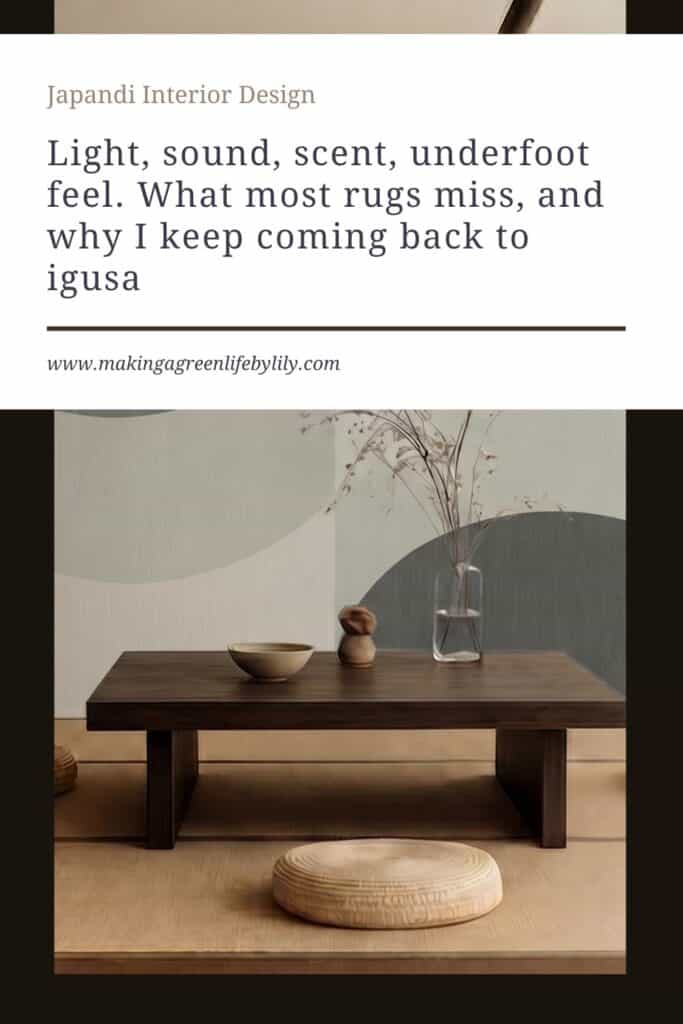
Tatami is woven from igusa, a rush grass grown primarily in Japan. It’s been used as a floor covering for centuries. What interests me most, from a design perspective, is that its qualities are almost entirely sensory, and almost entirely things you cannot see in a photograph.
The first is light. Igusa has a fine, directional weave. In natural light, it has a quiet, understated sheen, not glossy, not polished, more like the surface of still water than like lacquer. The way it catches morning light is different from the way it reads at dusk. That kind of variation is something I look for in good materials.
The second is sound. Hard floors with no rug have a certain acoustic restlessness. Every footstep lands. Every chair scrape registers. A tatami rug softens that, not into silence, but into something more settled and muffled. Rooms feel calmer when the sound is contained. I notice this every time I walk into a room that has one.
The third is smell. This is the one that surprises people. Igusa has a distinctive scent, dry, faintly sweet, a little like fresh hay in the sun. It’s strongest in the morning when the room warms up, and it softens over time into something subtler. Walking into a room with a good tatami rug in it feels different from walking into a room without one. That’s not incidental. It’s part of what makes a home feel genuinely calm rather than just look it.
The fourth is touch. Igusa has a soft give underfoot that’s different from wool and different from cotton. It stays cooler than most rugs in summer. The surface has a slight texture that feels deliberate and grounded. I’ve written more about what igusa actually is and how it behaves in my post on the wellness benefits of igusa, because the material is genuinely interesting on its own terms and deserves more than a paragraph here.
How to size and place a tatami rug in a real room
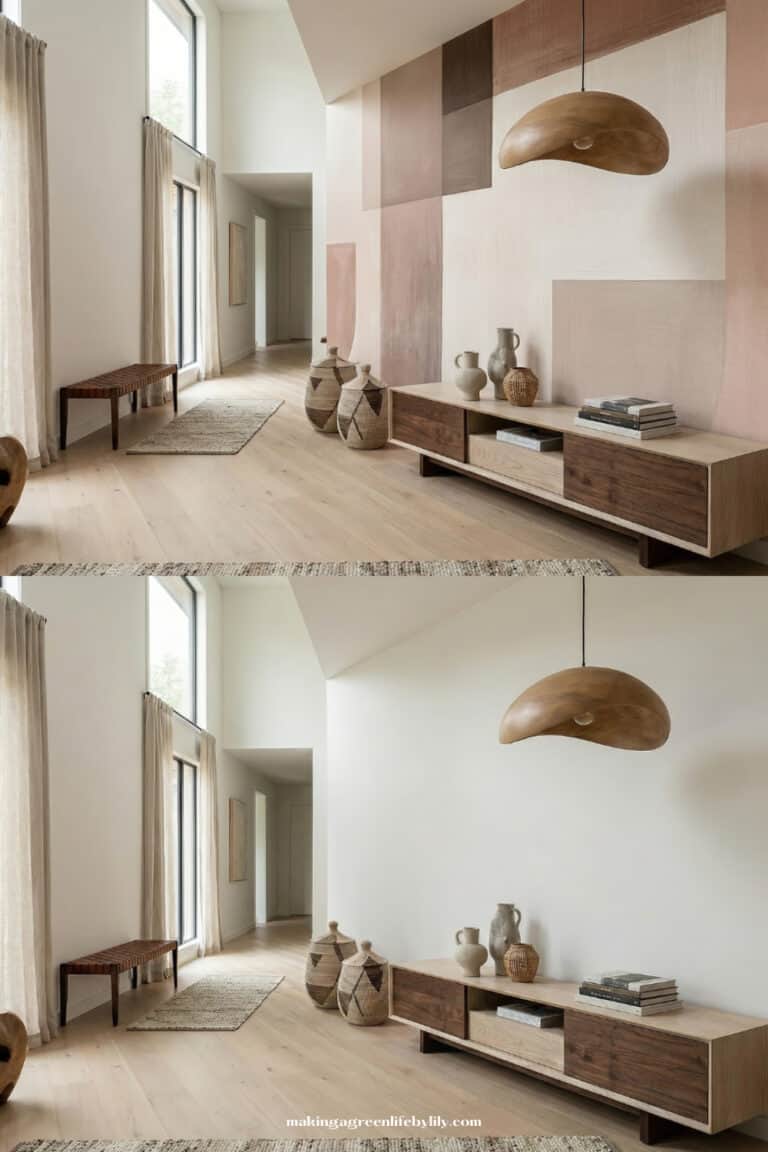
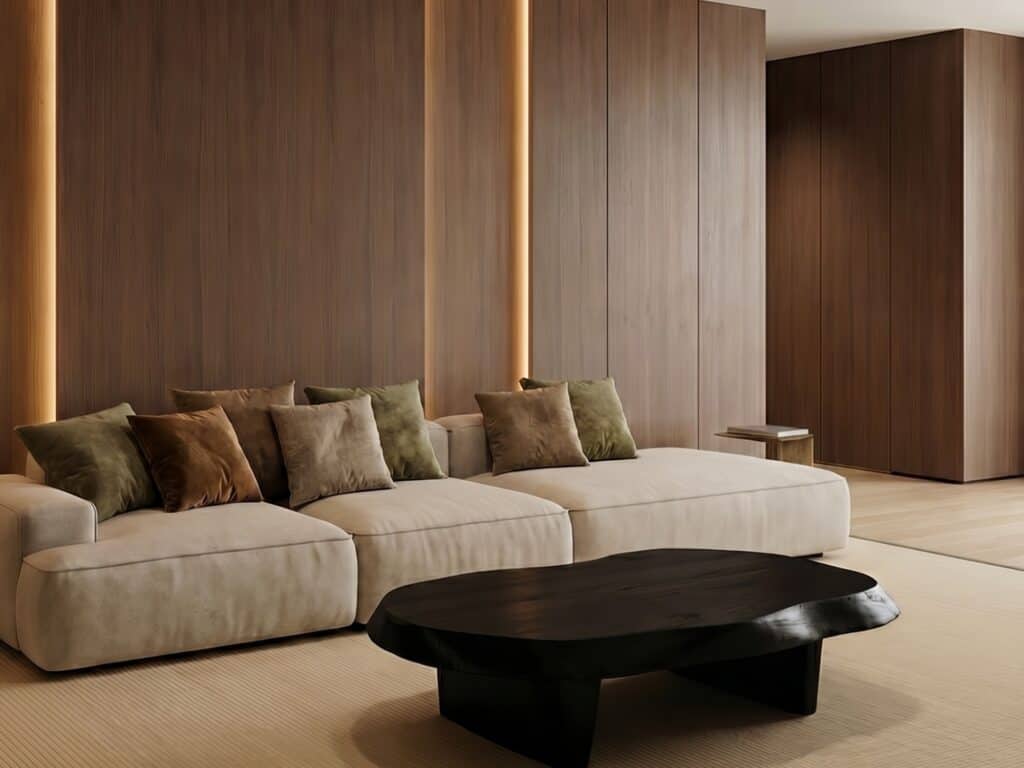
I use tatami rugs the same way I’d place any natural-fibre rug in a Japandi scheme, but with one additional thought: because the material has its own quiet presence, it doesn’t need a busy floor to work against. A simple surface in pale oak or stone lets it breathe.
Under a dining table, size up. The rug should extend at least 60cm beyond the table on each side so that chairs remain on the rug when pulled out. A rug that chair legs catch on is a rug that gets damaged quickly, and in family homes, this matters more than it might elsewhere.
In a living room, anchor the seating. The front legs of the sofa and chairs should sit on the rug. A rug that floats in the centre of the room without connecting to the furniture reads as decorative rather than structural, and a japandi rug is not a decoration.
In a bedroom, beside or at the foot of the bed. This is where tatami does some of its quietest work. The first sensation of the day, bare feet on igusa, changes the quality of the morning in a way that’s difficult to describe to anyone who hasn’t experienced it. I keep recommending it, and clients keep telling me afterwards that it was right.
Why the material suits Japandi rooms specifically
Japandi design is built from honest materials. Things that are what they look like. Things that improve with time rather than deteriorate, that develop a quality through use rather than losing it.
Tatami is exactly that. The colour of igusa isn’t applied, it’s intrinsic. It starts as a warm green and fades over time to a mellow pale gold. That’s not a flaw. That’s the material ageing in, the way good linen does, or oiled oak, or worn stone. A room with a tatami rug in it is a room that will look more settled and more itself in five years than it does today.
This is the opposite of what most rugs do. Most rugs look their best in the first year and begin to decline thereafter. The best japandi style rug you can choose is one that has somewhere to go, that ages with the room rather than in spite of it.
The family-home case
I design almost exclusively for families. Parents with young children, homes where the floor genuinely gets used, where calm and practical have to coexist rather than trade off. I spend a lot of time thinking about materials that can hold up to actual life without demanding constant attention.
Igusa is robust. It’s been used as a household floor material in Japan for centuries, in real homes with real daily life and children. The weave is dense and resilient. It sweeps cleanly. Spills, dealt with promptly, don’t soak in the way they do with looser-weave natural fibres. And because the rug doesn’t ask for weekly care or delicate handling, it doesn’t add to the low-level anxiety of maintaining a home.
There’s more on the practical side in my post on the benefits of a tatami rug, which is worth reading alongside this one. But the short version: this is a material that’s tough enough for family life without feeling utilitarian.
Why I’m adding one to my own collection
I’ve been sourcing tatami rugs for client projects for a while now. And every time, I find the same gap. What’s available is either a small meditation mat, a novelty item, or a product that doesn’t have the quality or the proportions for a real living room.
What I want to make is a properly sized, well-made tatami rug in traditional igusa grass, in the dimensions that real rooms actually need. One that’s been thought through for a Japandi home rather than adapted from something else.
It’s coming. If you’d like to hear about it first when it launches, you can join the newsletter at japandibymaglbl.com.
Final Thoughts on What a Japandi Rug Actually Does for a Room: My Case for Tatami
The japandi rug question used to frustrate me slightly, because the honest answer was always: go natural, go igusa, and I couldn’t point clients to a source I was genuinely confident in. That’s the thing I’m working to fix.
If you’d like help thinking through how a tatami rug might work in your own home, or how to approach a room project more broadly, my e-design service is here when you’re ready.
Related Japandi Articles:
What a Japandi Rug Actually Does for a Room: My Case for Tatami