
Last Updated on 23 April 2026 by
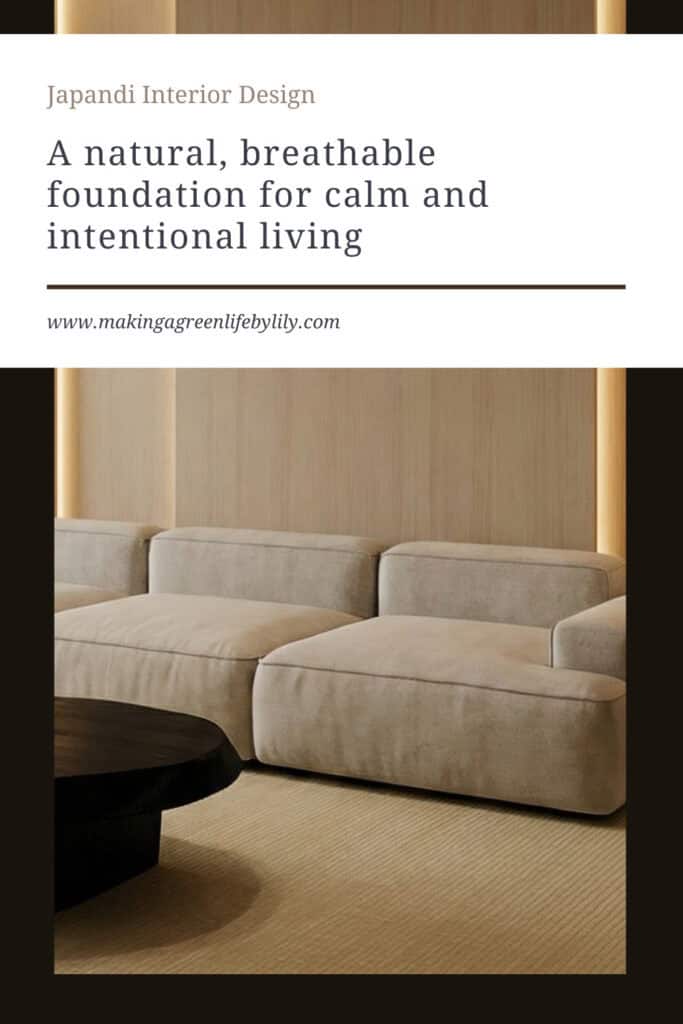
A natural, breathable foundation for calm and intentional living
When most people think about rugs, they tend to focus on appearance first. Colour, pattern, softness, and how well the piece ties a room together visually. Rugs are often treated as the final layer, something that completes a space rather than something that defines how the space feels to live in.
However, not all rugs function in the same way. Some are purely decorative, while others quietly shape the atmosphere, comfort, and even behaviour within a room.
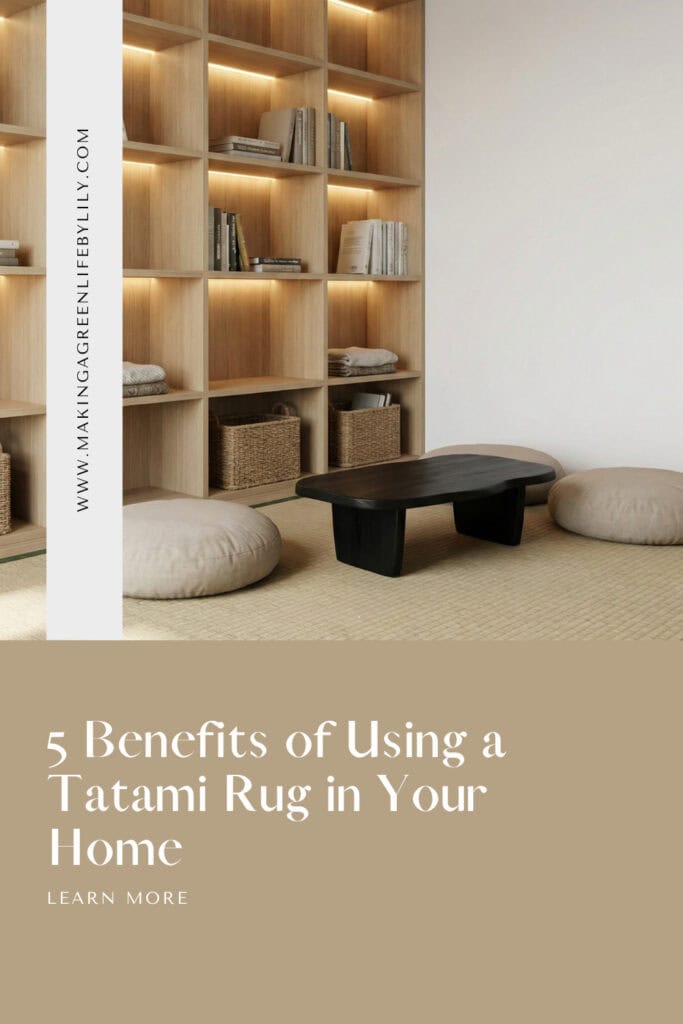
Tatami rugs fall into the second category. Made from natural igusa rush grass, tatami is deeply rooted in Japanese living culture. It has been used for centuries not simply as flooring, but as a surface for daily life. Sitting, resting, and gathering all happen directly on tatami. When introduced into modern interiors, especially Japandi or wellness-focused homes, tatami brings a completely different layer of experience compared to conventional rugs.
What makes tatami unique is not just how it looks, but how it interacts with your environment and your body. It responds to humidity, supports posture, and introduces a quiet sensory quality that synthetic materials cannot replicate.
- Modern Tatami: 7 Ways to Use Tatami Mats in a Japandi Interior Without Going Full Zen Temple
- Why Tatami Is Not Just a Traditional Japanese Material
- What is Japanese Tatami and How to Incorporate it in Your Home
Today, we will share 5 meaningful benefits of using a tatami rug. Not from a purely aesthetic perspective, but from a deeper understanding of how it can transform the way a space feels and functions over time.
#1. Natural Breathability That Supports a Healthier Indoor Environment

Lately many modern homes are filled with sealed, synthetic surfaces that look clean and refined but do very little to support the indoor environment. Tatami rugs behave differently.
Igusa rush grass contains natural air pockets within its fibres. This allows the material to absorb and release moisture depending on the surrounding conditions. In simple terms, the rug breathes. It responds to humidity levels in a subtle but continuous way. This becomes especially valuable in spaces where air quality and comfort matter. In humid conditions, tatami gently absorbs excess moisture, helping the room feel less heavy. In drier conditions, it releases stored moisture back into the air, preventing the space from feeling overly dry.
Most synthetic rugs cannot do this. Materials like polyester or polypropylene are sealed. They do not adapt to environmental changes. Instead, they remain static, often contributing to a flat, unresponsive indoor atmosphere. Over time, this difference becomes noticeable. A breathable surface like tatami supports a more balanced microclimate within the room. It is not something dramatic that you notice instantly. Rather, it builds quietly. The space feels fresher, lighter, and more comfortable without needing constant intervention.
There is also the question of odour. Synthetic fibres can trap smells within their structure, especially in high traffic areas. Tatami, by contrast, has a natural ability to absorb and neutralise mild odours. Combined with its subtle, earthy scent, it contributes to a calmer sensory environment.
If you are designing a space with wellness in mind, whether it is a living room, bedroom, or yoga area, this kind of material behaviour matters far more than surface appearance alone. Tatami is not just placed in a room. It becomes part of how the room breathes.
#2. A Firm Yet Comfortable Surface That Improves Posture and Daily Movement

Comfort is often misunderstood in interior design. Many people associate comfort with softness. Thick carpets, plush rugs, and cushioned surfaces are assumed to be the most comfortable options. However, comfort is not only about softness. It is also about support. Tatami rugs provide a firm yet forgiving surface. Unlike pile rugs that allow the body to sink in, tatami offers gentle resistance. This creates a stable foundation for sitting, standing, and moving.
This stability has a direct impact on posture. When you sit or kneel on a soft rug, your body tends to collapse slightly into the surface. Over time, this can lead to poor alignment and discomfort. On tatami, the body remains more upright and supported. This is one of the reasons tatami has been used traditionally for activities such as tea ceremonies, meditation, and daily living. It encourages a more grounded way of being in a space.
In modern homes, this translates into a different kind of comfort. Instead of lounging deeply into furniture, there is a subtle shift towards more mindful movement. Sitting on the floor becomes more inviting. Stretching or practising yoga feels more natural. Even walking barefoot across the surface creates a more connected experience. For homes designed around calm living, this is a significant advantage. The rug is no longer just something beneath furniture. It becomes part of how you use the space.
There is also a sensory aspect to consider. The texture of tatami is smooth yet slightly tactile. It is not soft in the traditional sense, but it is pleasant underfoot. This creates a balanced feeling between comfort and awareness. Rather than encouraging passivity, tatami supports a more active and intentional relationship with your environment.
#3. Low Maintenance and Reduced Dust Retention

Maintenance is often a deciding factor when choosing a rug. Traditional rugs, especially those with a pile, tend to trap dust, dirt, and allergens within their fibres. Even with regular vacuuming, particles can settle deep into the structure, making them difficult to fully remove. Tatami rugs offer a simpler alternative. Because they are flat-woven, dust does not embed in the same way. It sits on the surface, making it easier to clean. A light vacuum or a simple wipe is often enough to maintain the rug.
This makes tatami particularly suitable for people who are sensitive to dust or who prefer a cleaner indoor environment with less effort.
The structure of the material also means it does not shed or pill like synthetic rugs can over time. There is no fluff to flatten or fibres to break down. The surface remains consistent, maintaining its appearance with minimal intervention. From a practical perspective, this reduces long term maintenance. You are not constantly restoring the look of the rug or dealing with visible wear patterns caused by compressed fibres.
There is also a psychological benefit to this simplicity. A surface that is easy to maintain contributes to a sense of calm. It removes a layer of daily effort and allows the space to feel more effortless. In a world where many home elements require ongoing upkeep, choosing materials that simplify your routine can have a surprisingly large impact on how you experience your home. Tatami offers that quiet ease.
#4. Seasonal Comfort Without the Need to Change Rugs

Seasonality plays a significant role in how comfortable a space feels throughout the year.
Many rugs are designed with a specific season in mind. Thick, plush rugs feel warm and cosy in winter but can feel heavy and uncomfortable in warmer months. Synthetic materials can also trap heat, making the space feel less breathable. Tatami adapts naturally to seasonal changes.
In warmer weather, the woven structure allows air to circulate. The surface feels cool and dry underfoot, providing relief from heat without the need for artificial cooling. In more humid conditions, tatami absorbs excess moisture, helping to reduce that sticky, heavy feeling often associated with summer interiors.
During transitional seasons, this adaptability becomes even more valuable. The rug continues to regulate itself, maintaining a balanced feel without requiring you to swap it out for a different option. This consistency simplifies interior styling. Instead of changing rugs with the seasons, you have one surface that works year round. Over time, this also enhances the overall experience of the space. There is a continuity that supports a more stable and grounded environment.
The material itself also ages gracefully. Rather than showing wear through flattened fibres or discolouration, tatami develops subtle changes in tone. These changes are natural and often add to its character rather than detracting from it. This kind of ageing aligns closely with the principles of wabi-sabi, where beauty is found in natural evolution rather than perfection.
Tatami does not try to remain unchanged. It evolves quietly with your home.
#5. A Deeper Connection to Material Authenticity and Intentional Living

Perhaps the most significant benefit of a tatami rug is less tangible but deeply felt. It introduces a different relationship with materials. In many interiors, rugs are chosen for visual impact. Bold patterns, strong colours, or statement textures. While these can be effective, they often prioritise appearance over experience.
Tatami shifts that focus. Its beauty is understated. The colour palette is neutral, the texture is subtle, and the design is minimal. Instead of drawing attention, it creates a sense of calm foundation within the space. This allows other elements in the room to breathe. Furniture, lighting, and architecture are not competing with the rug. They are supported by it.
More importantly, tatami encourages a slower, more intentional way of living. Because it is comfortable to sit or rest on, it invites you to engage with your space differently. You may find yourself spending more time on the floor, moving more freely, or simply pausing more often. This is not about changing your lifestyle dramatically. It is about small shifts that accumulate over time.
The material itself reinforces this. Knowing that it is made from natural rush grass, that it interacts with the environment, and that it ages gracefully creates a deeper sense of connection to the object. In a home filled with mass-produced, synthetic items, this kind of authenticity stands out. It is not loud. It does not demand attention. But it changes how the space feels. And that is often what defines a truly well-designed interior.
Final Thoghts on 5 Benefits of Using a Tatami Rug in Your Home
Choosing a rug is often seen as a finishing decision, but it has the potential to shape far more than just the visual outcome of a room. Tatami rugs offer a different approach.
They support a healthier indoor environment through natural breathability. They encourage better posture and more mindful movement. They simplify maintenance while reducing dust retention. They adapt to seasonal changes without needing replacement. And perhaps most importantly, they bring a sense of material authenticity that aligns with a more intentional way of living.
This does not mean tatami is the right choice for every space. Traditional rugs still have their place, especially when softness or bold visual impact is the priority. However, if your goal is to create a calm, grounded, and wellness-focused environment, tatami offers something deeper.
Related Japandi Articles:
- 10 Unexpected Ways to Use Wallpaper in a Japandi Home
- How To Create Family-Friendly Japandi Home
- The Role of Negative Space in Japandi Design: A Scientific Perspective
5 Brilliant Ways To Use Wood Wall Panelling In Japandi Style Home
5 Reasons You Should Opt for Wood Slat Panelling for Your Japandi Home
5 Ways to Create A Zen-Like Peaceful Environment in Your Japandi Home
- 5 Steps You Should Consider When Choosing A Bed For Japandi Bedroom
- Why More Craftmanship in Japandi?
- Colours of Japandi Design
Where to Buy Sustainable Japandi Furniture in the UK and Netherlands
5 Benefits of Using a Tatami Rug in Your Home


One Comment