
Last Updated on 11 June 2026 by
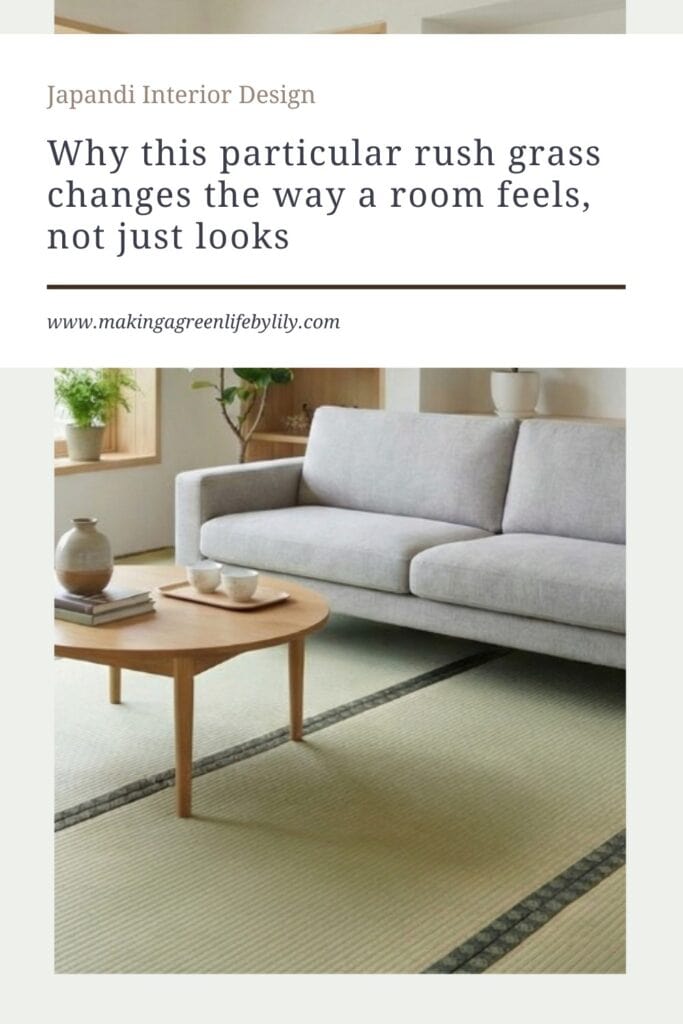
Why this particular rush grass changes the way a room feels, not just looks
Most conversations about natural fibre rugs stay on the surface. Jute is rustic. Sisal is durable. Seagrass is good for hallways. The descriptions are practical and a little flat. They tell you what the material is, not what it does.
- The Wellness Benefits of Igusa You Probably Didn’t Know
- 7 Thoughtful Ways to Make Your Living Room Feel More Japandi
- Why Tatami Is Not Just a Traditional Japanese Material
Igusa is different. Not because it’s rare or expensive, but because its qualities are almost all sensory, and almost all things you only understand once you’ve spent time with it. The smell alone is worth the conversation.
What igusa actually is
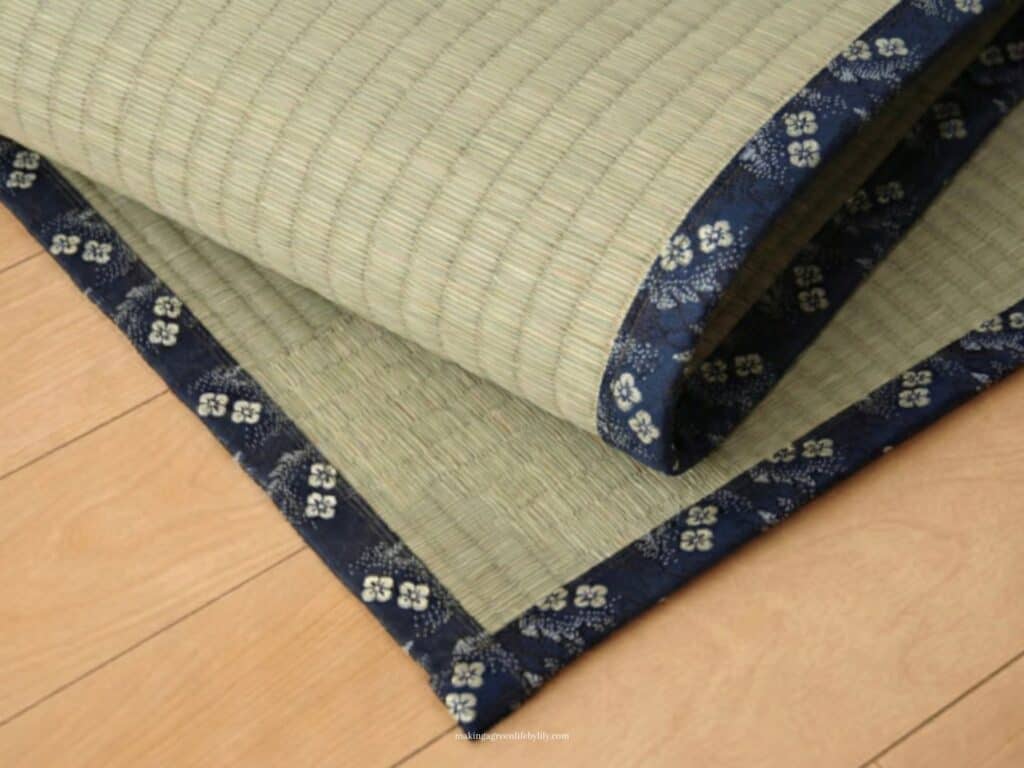
Igusa is a rush grass, grown primarily in Kumamoto prefecture in Japan, though historically it was cultivated across much of the country. It’s harvested by hand, dried, then woven into the dense, smooth mats we know as tatami. The plant itself grows to about a metre in height, and the usable part is the stem, pithy on the inside and smooth on the outside, which is what gives tatami its characteristic surface: firm, slightly textured, with a fine sheen.
It’s one of the oldest used natural fibres in Japanese domestic life. Not as a cultural artefact or a design statement, but as a straightforward floor material that worked well and has kept working well for a very long time.
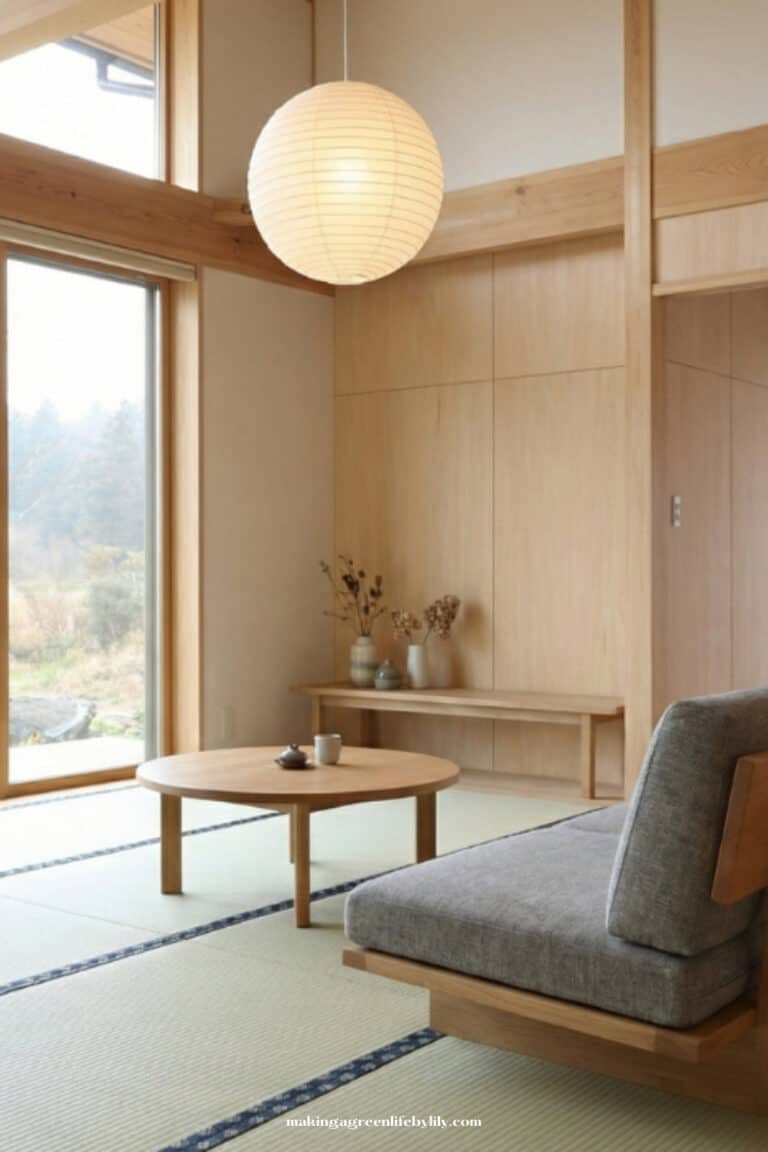
As a japandi material, it sits alongside oak, linen, stone, and clay in the category of things that are honest about what they are, that don’t pretend to be something else, and that tend to improve with care over time.
The sensory case for igusa underfoot
The smell comes first. Dry, faintly sweet, a little like sun-warmed hay or clean straw. It’s strongest in the morning when the room heats up, and on warm days in general. Over months, it softens into something subtler, more background than foreground, but it never fully disappears. I’ve had clients say they walk past the room and notice it before they’ve even opened the door.
Then there’s the texture. Igusa has a soft give underfoot that isn’t quite like any other natural fibre. It’s firm, not cushioned, but there’s a slight compression that makes bare feet feel held rather than just landed. In summer, it stays noticeably cooler than wool. In a Japandi home, where the floor is often a large expanse of timber or stone, a tatami rug gives you a place to stop and feel the ground differently.
The sound is the third thing. A hard floor with no rug is acoustically live. Sound bounces, footsteps echo, the room feels a little unsettled. A tatami rug made from igusa absorbs enough of that to shift the quality of the space without deadening it. The room becomes quieter without feeling padded.
Why igusa works specifically as a japandi material
Good Japandi design is built from materials that are what they look like. Igusa doesn’t try to be anything other than itself. The colour is the colour of the plant, not a dye applied over the top. It starts as a warm, slightly green straw tone and shifts over time towards a pale honey gold. That change is part of it. It’s not wear; it’s the material settling.
This is actually one of the things I find most interesting about igusa as a natural fibre rug choice. Most rugs look their best new and decline from there. Igusa goes the other way. A room with a well-looked-after tatami rug in it looks more settled and more itself as the months pass. The colour connects to the oak and the linen in the room in a way that feels earned rather than arranged.
There’s also the question of what it’s made from. For clients who are thinking about sustainable rugs or materials that don’t carry a large environmental or health burden, igusa is a reasonable answer. It’s a rapidly renewable plant fibre, grown without the processing requirements of synthetic alternatives, and it doesn’t off-gas.
The practical side: care, longevity, and family homes
I get asked about care more than almost anything else when I recommend igusa to clients with children. The honest answer is that it’s more resilient than it looks, and less demanding than wool.
Dry sweeping or low-suction vacuuming works well for regular maintenance. Avoid saturating it with water, igusa doesn’t like being left wet for long periods. For spills, the approach is quick action: blot, don’t rub, and let it dry naturally. The weave is dense enough that liquids tend to sit on the surface for a moment rather than being immediately absorbed, which gives you time.
It doesn’t pill. It doesn’t shed. It doesn’t require specialist cleaning products. For a family home, these are meaningful practical advantages.
It does need some air circulation to stay in good condition, which is one reason I don’t recommend it in very damp or poorly ventilated rooms. A bathroom or a basement is not the right home for a tatami rug. A well-lit living room, a bedroom, a dining room: these are where it does its best work.
Final Thoughts on Igusa, Tatami, and the Quiet Science of Natural Fibres Underfoot
If you want to understand more about what igusa does beyond the practical, my earlier post on the wellness benefits of igusa covers the material in more depth. And if you’d like to see the tatami rug I’m bringing into my own product line, you can join the newsletter at japandibymaglbl.com. It’ll be the first thing I send when it’s ready.
Related Japandi Articles:
- 10 Unexpected Ways to Use Wallpaper in a Japandi Home
- How To Create Family-Friendly Japandi Home
- The Role of Negative Space in Japandi Design: A Scientific Perspective
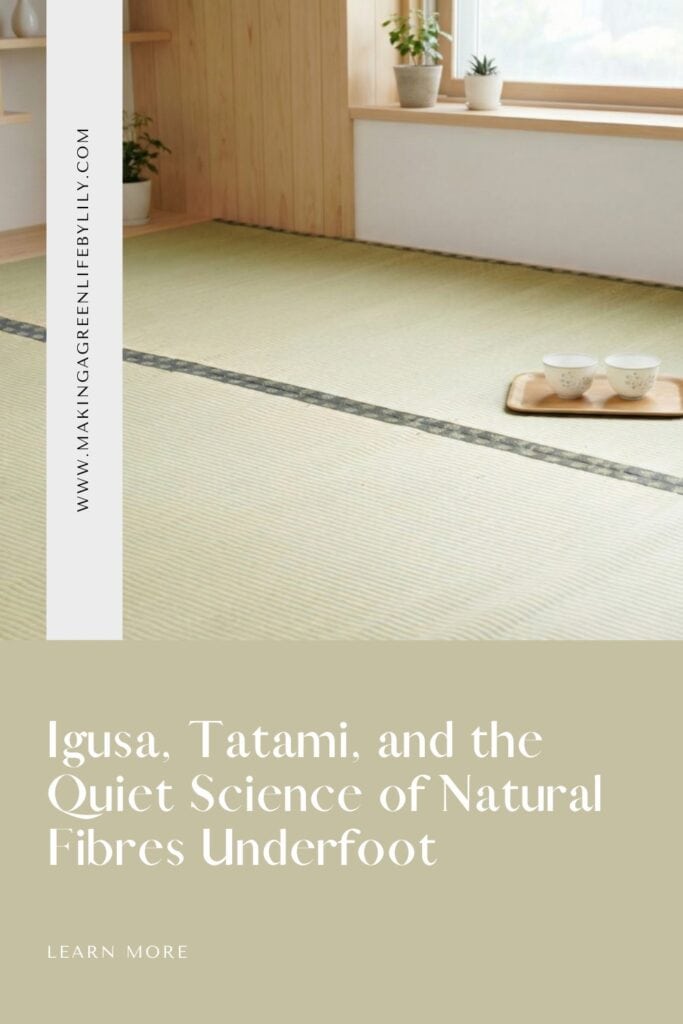
Igusa, Tatami, and the Quiet Science of Natural Fibres Underfoot



2 Comments