
The Art of Designing a Calming Wabi Sabi Bedroom
The bedroom should be the calmest place in the home, a space where rest comes easily, where your surroundings soothe you, and where you feel genuinely comfortable. But for many, bedrooms have become overstyled, cluttered, or dominated by trends that prioritise visual perfection over emotional ease. If you’ve ever felt that your bedroom looked good in theory but didn’t feel right in practice, Wabi-Sabi could offer the clarity you’ve been missing.
Wabi-Sabi is not a style in the conventional sense. It’s a Japanese philosophy that celebrates imperfection, impermanence, and the authenticity of natural materials. It encourages a quieter kind of beauty, the sort that emerges from wear, age, and emotional connection. In interior design, Wabi-Sabi rejects the polished and pristine in favour of the textured, the uneven, the handmade, and the lived-in.
A Wabi-Sabi bedroom isn’t just visually appealing; it’s deeply personal. It reflects who you are, where you’ve been, and what you truly need to rest. There’s no need to match everything, no need for symmetry, and certainly no requirement to throw things away just because they’ve aged. In fact, the opposite is true: in a Wabi-Sabi bedroom, the wrinkled linen, the scuffed floorboards, and the slightly chipped vase all belong. They tell a story, your story.
- Exploring Wabi-Sabi, Minimalist, and Modern Japandi Designs
- How to Create Wabi-Sabi Japandi Kitchen
- What is Japandi Style? How to Incorporate Japandi Design in Each Room?
In this blog, we’ll explore practical, beginner friendly steps to help you create a bedroom rooted in Wabi-Sabi philosophy. You’ll learn how to work with what you already have, choose materials and textures that enhance calm, and make peace with imperfection in a way that feels freeing, not forced. Whether you’re starting from scratch or updating an existing space, you’ll come away with tools that don’t just change your room but the way you experience it. Let’s begin with the foundation of any meaningful design: learning how to shift from decorating for appearance to curating for feeling.
#1. Shift from Styling to Feeling

The first practical step to creating a Wabi-Sabi bedroom isn’t choosing a paint colour or buying a new lamp. It’s changing your mindset. Most people decorate by asking, How should this look? In Wabi-Sabi, the question becomes, How should this feel? That one shift transforms the entire process and ultimately, the outcome.
Wabi-Sabi bedrooms are not built around themes, palettes, or trends. They’re shaped by emotion and experience. Before you move a single piece of furniture, take a moment to sit in your bedroom at different times of day. How does it feel in the morning light? Does the space feel tense or welcoming when you walk in? Where do your eyes naturally go? Do they rest or jump from object to object? These small observations help you design a room that supports your energy, not just your style.
Now, take a slow inventory of your space. Not with the intention of tidying or redecorating, but with the aim of becoming more aware of what you’ve surrounded yourself with. Are there objects that bring tension instead of calm? Are you holding onto things that no longer reflect who you are or how you live? Wabi-Sabi encourages thoughtful editing, not for the sake of minimalism, but to make space for peace. If something feels like visual or emotional clutter, let it go or move it to another part of the home where it might feel more useful.
When choosing what to keep or add, favour items with a sensory quality. Wabi-Sabi is deeply tactile. A slight scratch in a wooden headboard. The softness of a linen throw after years of use. The uneven shape of a handmade lamp base. These are not flaws, they are where the beauty lies. If you’re adding something new to your bedroom, seek out materials that are unfinished or imperfect in a quiet way. A stone dish with a crackled glaze. A ceramic vase with a warped rim. These objects bring depth and soul that flat pack furniture simply cannot replicate.
One of the most overlooked but transformative aspects of Wabi-Sabi design is asymmetry. Many bedroom layouts default to visual balance identical bedside tables, matching lamps, and symmetrical art above the bed. In a Wabi-Sabi bedroom, it’s perfectly fine (even encouraged) to break that visual rhythm. You might have a stool on one side of the bed and a stack of books on the other. Or a pendant light on one side and a vintage lamp on the other. This asymmetry adds a lived-in feeling and softens the formality that many bedrooms unintentionally create.
There’s also something deeply restorative about creating small moments of pause within the space. Wabi-Sabi bedrooms often include quiet corners, not areas designed to impress, but simply places to rest your attention. This might be a bare wall with shifting shadows. A single branch in a vase on the windowsill. A woven mat on the floor beside the bed. These elements don’t demand anything of you, they offer stillness.
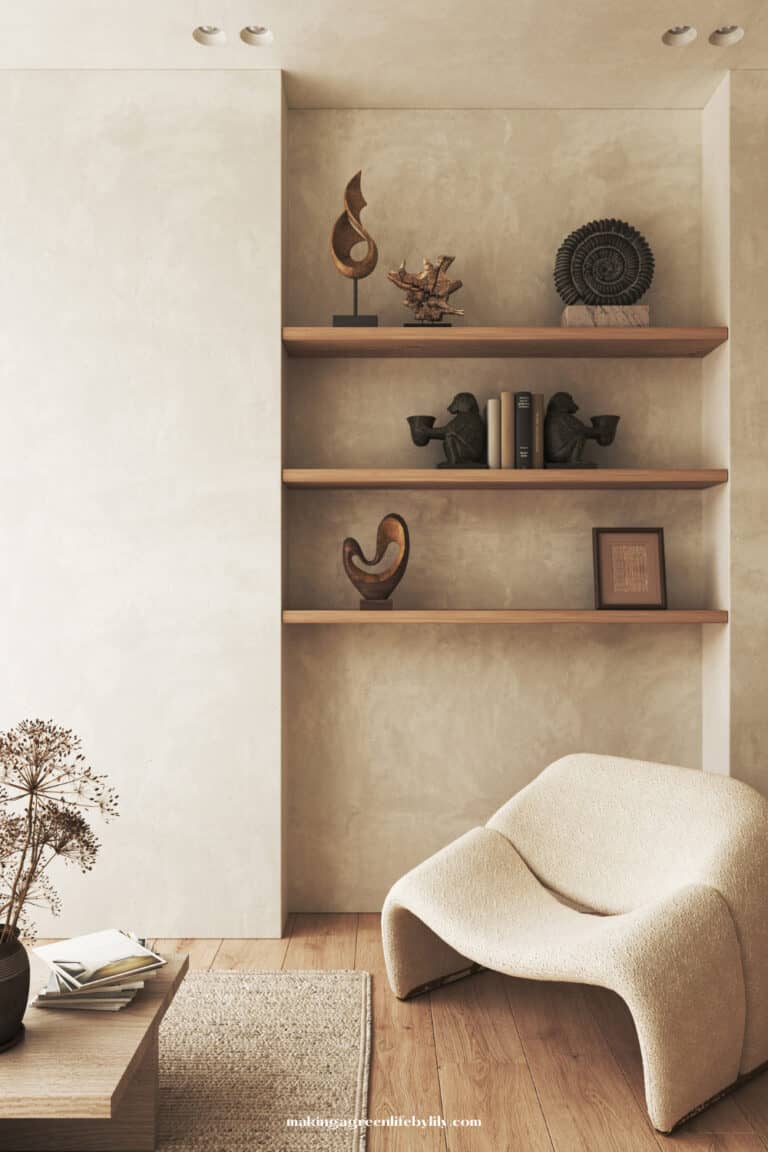
If your bedroom feels overly styled or complete, consider removing one or two decorative pieces. This can immediately shift the energy and invite a sense of openness. In Wabi-Sabi, absence is not a void. It’s space to breathe. Leave a shelf half empty. Let the top of your dresser stay clear except for one object that means something to you. The more room you leave around things, the more meaning those things hold.
Finally, lean into the idea that your bedroom doesn’t need to be finished. Wabi-Sabi embraces transience, the idea that nothing is ever truly complete. Your bedroom should evolve as you do. Let yourself move things around. Add when you need comfort. Subtract when you need space. Observe what supports your rest, and allow everything else to fade into the background. Designing a Wabi-Sabi bedroom starts with feeling, not finishing. And when you build a room around how you want to feel, not how you want it to look—you begin to create a space that supports your truest rhythm of rest.
#2. Layering Texture and Embracing Natural Materials
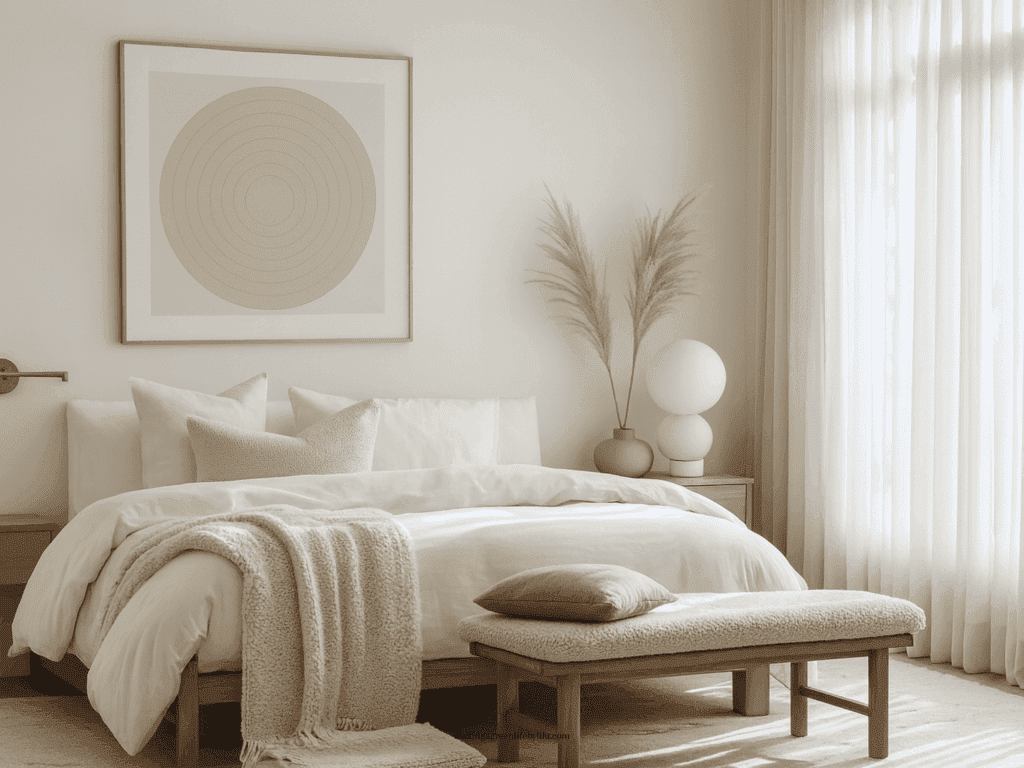
If there’s one design principle that brings a Wabi-Sabi bedroom to life, it’s texture. More than colour, pattern, or even layout, texture is what makes a room feel real. In Wabi-Sabi design, texture tells the story of material, time, and imperfection. It invites touch, slows the eye, and brings a sense of emotional warmth that slick, overstyled rooms often lack. The goal isn’t to layer for the sake of variety, it’s to create subtle depth using natural, honest materials that age with grace.
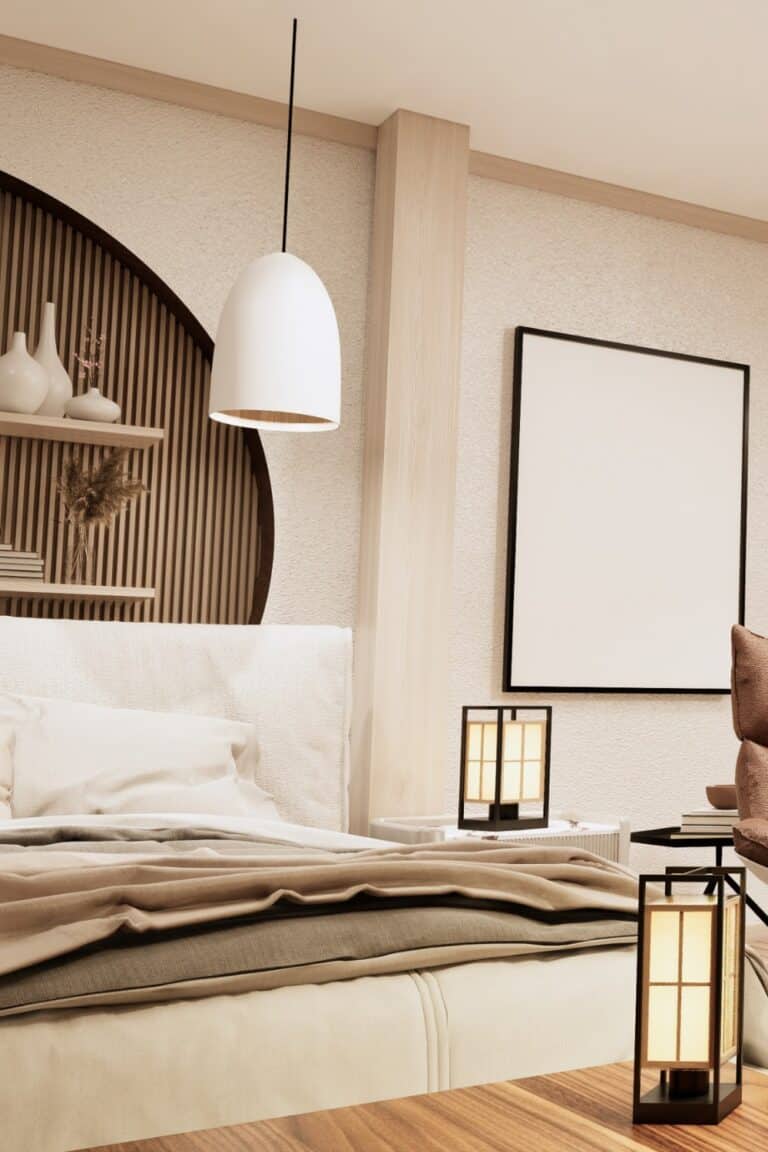
Start with the bed, this is not only the visual centre of your room but also the most intimate surface. In Wabi-Sabi design, you want the bed to feel like a soft exhale. Linen bedding is ideal because of its breathable fibres, unpolished appearance, and how it naturally wrinkles. Unlike high-thread-count cottons that look pristine, linen has a relaxed, broken-in texture that improves with each wash. You don’t need to iron it. Let the folds fall where they may. This softness feels deeply human.
Layering is key here, but not in a decorative sense. Think of it as dressing for comfort: a lightweight linen duvet, a loosely draped throw in raw wool or hand dyed cotton, and perhaps a single cushion made from vintage textiles or handwoven fabric. There’s no need for five pillows and a matching set. Keep it simple, tactile, and functional. Each piece should invite you to sit, lie down, or rest your head.
Next, look to your floor. Even if you have a carpeted room, you can still add texture with a handwoven rug, ideally made from jute, sisal, or undyed wool. These rougher textures contrast beautifully with the softness of the bed and help ground the space. Place the rug off-centre or slightly skewed to reinforce the natural asymmetry Wabi-Sabi encourages. It’s not about perfect symmetry; it’s about the ease of placement, as if it landed there organically.
Natural materials are essential throughout the room. If you’re selecting or updating furniture, opt for pieces made from wood, bamboo, stone, clay, rattan, or iron. You don’t need an entirely new set; just one or two anchor items can define the tone. For example, a small wooden bench with visible knots and irregular grain tells a story in a way no lacquered side table ever could. If your furniture is mass produced or flat packed, consider distressing the surface with a gentle sandpaper rub or adding a handmade object on top to soften its lines.
Speaking of objects, this is where many people overdo or underdo. A Wabi-Sabi bedroom doesn’t require many accessories but it does benefit from pieces with soul. A ceramic bowl with a slight chip. A stoneware cup that holds dried flowers. A wooden tray that’s scratched from years of use. You don’t have to buy anything new. Look around your home. What do you already have that feels real? That shows time and care?
One of the most powerful yet understated Wabi-Sabi elements is the use of walls. Avoid glossy paint finishes. Instead, opt for limewash, clay based paints, or matte textured finishes that offer subtle movement and depth, even in neutral colours. These surfaces catch the light differently throughout the day, creating soft variations and shadows that bring the walls to life. If repainting isn’t an option, even adding a large piece of raw fabric or hanging a woven tapestry can bring gentle texture to a plain wall.
When introducing décor, choose items with roughness, grain, or inconsistency. Polished marble or shiny metal rarely feels Wabi-Sabi. Instead, introduce objects made by hand or that show their age like a clay lamp, an antique mirror with a fading patina, or a basket that’s begun to fray at the edge. These details don’t need to be perfect. In fact, they shouldn’t be. Wabi-Sabi homes are filled with signs of life, not flaws, but fingerprints of experience. Even something as simple as a bedside water carafe can embody texture and tactility. Choose a slightly irregular glass or ceramic version, something that feels different in the hand compared to mass produced drinkware. A curtain doesn’t need to be expensive to feel beautiful—try gauzy cotton, raw silk, or unlined linen to let light filter through naturally.
And remember: less is more. You’re not trying to fill the room, but to feel it. Let negative space be part of the design. Leave shelves half empty. Hang only one artwork or none at all. The textures of the room, wood, wool, clay, linen, and paper will do more to communicate comfort than a full wall of prints ever could. Texture in a Wabi-Sabi bedroom isn’t just something you see, it’s something you sense. You feel it in the uneven weave of a blanket, the coolness of a ceramic dish, or the soft crinkle of linen as you turn in bed. These tactile moments bring you back to yourself. They make your room feel alive, layered, and, above all, comforting.
#3. Working with Time, Imperfection and Emotional Value
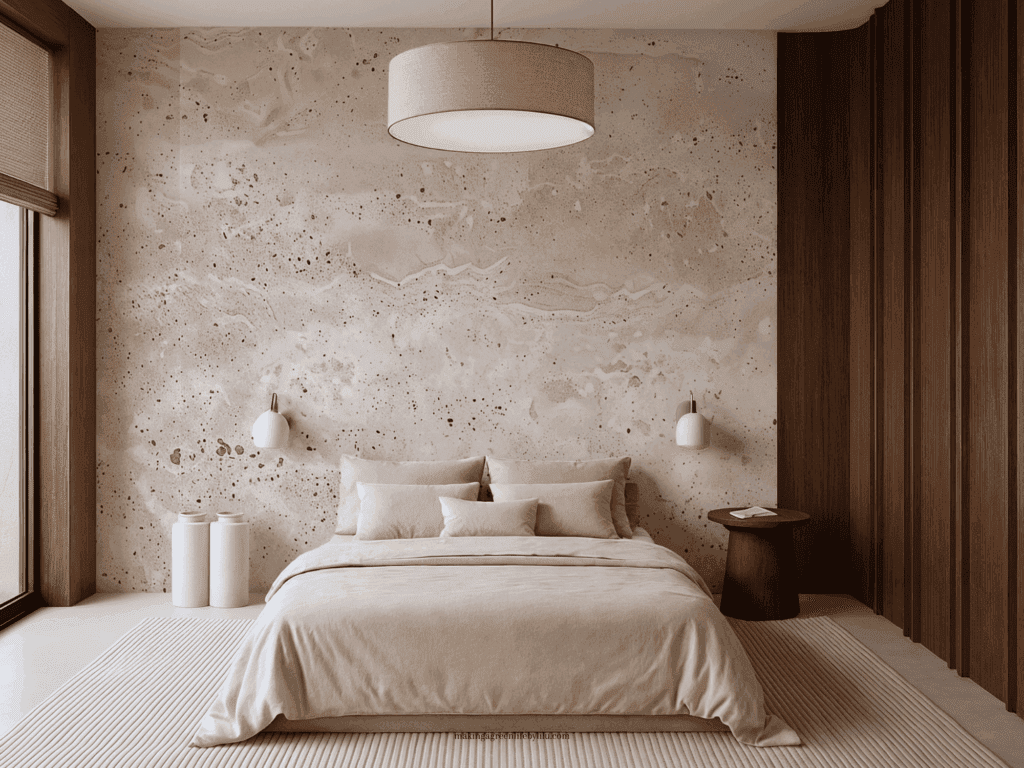
A Wabi-Sabi bedroom isn’t defined by what’s new or fashionable, it’s shaped by what has meaning. This is where the philosophy differs most from conventional interior design. Instead of striving for flawless finishes and fresh from the showroom perfection, Wabi-Sabi teaches us to embrace the wear, age, and individuality of our belongings. A space becomes beautiful not despite its imperfections, but because of them.
This mindset begins by valuing time. In most homes, wear is something we hide. Scratched floors are covered, aged furniture is replaced, and chipped ceramics are thrown away. But in a Wabi-Sabi bedroom, time is celebrated. A slightly faded rug or a bedside table marked with rings from your morning tea doesn’t detract from the space—it adds soul to it. These traces of use tell a quiet story: life has happened here.
You don’t need to go out and find perfectly imperfect objects. Look around your bedroom right now. Is there a piece you’ve been tempted to replace because it’s no longer pristine? Before removing it, take a second look. Could its wear be reframed as character? Could its flaws be viewed as evidence of history? A Wabi-Sabi space invites you to keep and honour what still serves you, even if it’s no longer shiny or symmetrical.
This applies to furniture as much as it does to smaller pieces. An old wooden chest of drawers may have a stuck drawer or a worn finish, but if it still functions and has presence, it deserves its place in your room. Try softening the edges with a beeswax balm rather than refinishing it. Let the patina remain. If anything, it makes the chest more calming to interact with than a newer, high-gloss alternative.
The same approach can be taken with textiles. If a blanket is slightly frayed or a cushion has begun to fade, that doesn’t mean it needs replacing. Wash it gently. Repair it if needed. Use visible mending, a technique embraced by the Japanese art of boro, where patches and stitches are intentionally left exposed. In doing so, the repair becomes part of the story, a visible symbol of care and continuation.
Objects that carry emotional value are especially important in a Wabi-Sabi bedroom. This is not about nostalgia for the sake of sentimentality. It’s about choosing pieces that create comfort and resonance. A mug from a friend. A quilt made by a family member. A book you return to time and again. These items bring warmth that no catalogue can recreate. They are anchors in a space meant for rest. Let these emotional objects have room to breathe. Place a keepsake box on a low shelf. Leave space beside it. The emptiness around it is intentional; it allows the object to speak. When every surface is crowded, nothing can be felt. But when there is space around an object, its meaning becomes clear.
This principle also applies to artwork. Wabi-Sabi bedrooms don’t typically feature gallery walls or highly curated art displays. Instead, one or two pieces might be hung, often handmade, naturally aged, or personal in origin. A brushwork sketch, a pressed flower, a faded photograph. If you display art, let it age. Don’t rush to replace it when it yellows or curls slightly at the corners. These are signs of life.
If you’re someone who prefers very minimal décor, consider seasonal shifts as a subtle way to add emotional rhythm to your space. A bowl of foraged leaves in autumn. A stone from a summer walk. A branch is placed in a ceramic vessel during winter. These objects are free, ever-changing, and tied to moments of awareness. They ask nothing of you but your attention. Living with Wabi-Sabi doesn’t mean accepting disrepair. There’s a quiet difference between neglect and imperfection. It means choosing to care for what you own in a way that preserves its integrity while allowing signs of time to remain. Clean slowly. Dust with intention. Repair softly. When you do this, you’re not just maintaining your belongings; you’re building a relationship with them.
Perhaps the most important shift that Wabi-Sabi encourages is internal. It invites you to be more forgiving. Not just of your home, but of yourself. If your bed isn’t made perfectly, or there’s laundry folded in a pile, that doesn’t subtract from the room’s beauty. It adds to its reality. In a Wabi-Sabi bedroom, the focus is never on performance. It’s on presence. It’s not about getting it right; it’s about feeling at ease. This is what makes a Wabi-Sabi bedroom feel so unlike any other. It’s a room that holds space for imperfection, honours time, and values meaning over novelty. It’s a room where you don’t need to perform. You can simply be and feel more whole because of it.
#4. Designing a Bedroom That Slows You Down
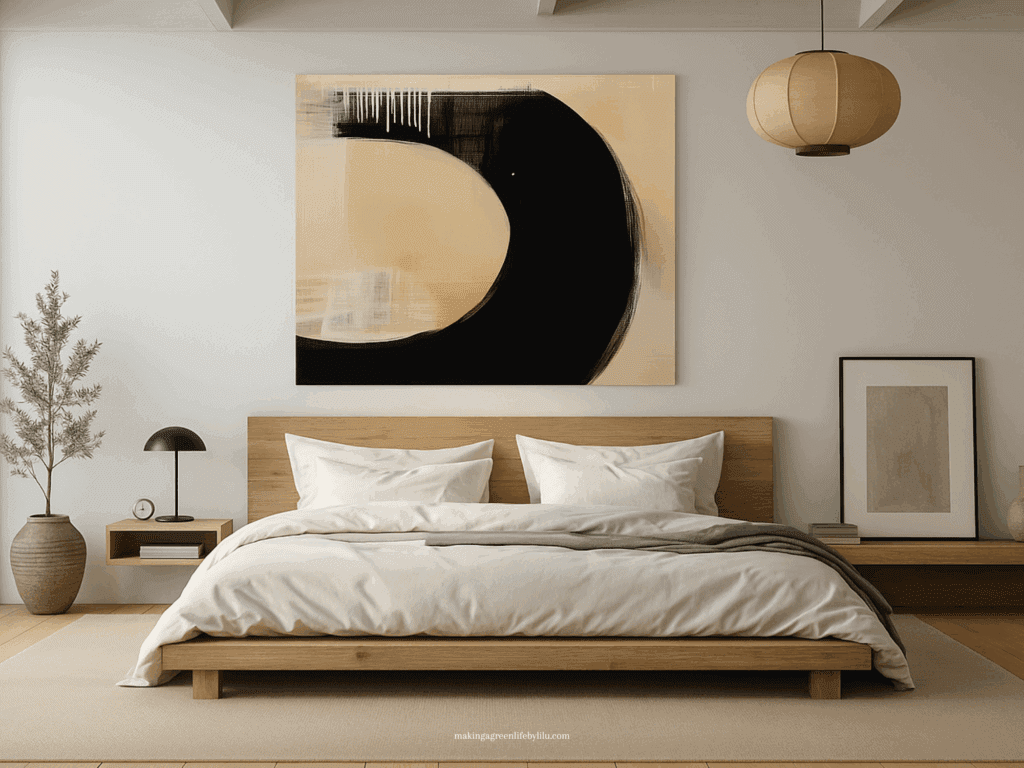
In the rush of daily life, we often overlook how much our environment influences our pace. If your bedroom feels chaotic, cluttered, or overstimulating, chances are your mind mirrors that feeling. But when a space is designed to slow you down, everything softens, your breath, your thoughts, even your heart rate. Wabi-Sabi offers a design language that actively encourages this slowing. It does so not through rigid rules, but through quiet cues that bring you back to presence.
The first cue is space. Not just the size of your room, but the way space is used and, more importantly, respected. In a Wabi-Sabi bedroom, you leave parts of the room open on purpose. You let the space between furniture and walls stay clear. You resist the urge to fill every corner. These quiet zones are not empty, they are essential. They give your body permission to move slowly, and your mind permission to pause. If your bedside feels cramped, remove the unnecessary. If there’s furniture you’re not using, consider relocating it. The goal isn’t minimalism, it’s breathing room.
Next, think about how you begin and end your day. A Wabi-Sabi bedroom supports these transitions with care. Place a small ceramic tray on your bedside table to hold your earrings or watch. Keep a lamp with a dim, warm bulb to avoid the harshness of overhead light. If you like to read, store one or two books near your bed, no more. The bedroom should gently encourage you to rest, not remind you of all you haven’t finished. Lighting is one of the most powerful design tools in setting the pace. Natural light is ideal during the day, so use sheer curtains or linen drapes that filter light without blocking it. In the evening, shift to lower lighting. Use table lamps, wall sconces, or paper lanterns with warm-toned bulbs (ideally 2700K or lower). Candlelight is also a beautiful addition if used safely. The goal is to create a soft atmosphere that invites slowing, not stimulation.
Flooring can also change your relationship with pace. If you rush around your room in shoes or on slippery tiles, your movements will mirror that urgency. Try placing a handwoven rug beside your bed so you step onto something soft. Better yet, go barefoot more often. The physical act of slowing your walk, of feeling texture underfoot, brings your body back to the present.
Sound matters too, even when it’s not obvious. A creaky chair, a ticking clock, or rattling blinds can all subtly affect your state of mind. In a Wabi-Sabi room, silence is valued, but natural ambient sounds are welcome. Open a window to hear the wind, or use a linen curtain that sways slightly in the breeze. If your room echoes, soften it with a woven wall hanging or textured textiles that absorb sound gently. Stillness isn’t always silent, but it’s never noisy. Even storage should support slowness. Avoid overstuffed drawers or wardrobes bursting with clothes. Instead, store items by frequency of use. Keep what you need daily in reach, folded calmly, not crammed. Try slow, mindful routines like folding your pyjamas before bed or laying out tomorrow’s outfit. These small rituals give shape to your day without pressure. They’re not tasks, they’re transitions.
Another underrated Wabi-Sabi tool is scent. Slow living is sensory, and smell is one of the fastest ways to shift your mood. Use a small dish of cedar chips, a beeswax candle, or a few drops of essential oil on a cloth to subtly perfume the air. Choose scents that ground you, like vetiver, sandalwood, or lavender. Let scent become part of your rest ritual. Something that signals, without words: the day is ending, and you are safe.
Finally, make space for reflection. This doesn’t require a dedicated meditation corner or expensive decor. It could be a notebook beside your bed. A comfortable chair with a view. A windowsill where you sit for five quiet minutes. A Wabi-Sabi bedroom is not just a space for sleep; it’s a space to return to yourself. Designing for slowness is ultimately designing for self-awareness. You don’t need to redesign your entire room to feel the shift. Start small. Remove one distracting item. Add one comforting one. Dim a light. Fold a blanket. Sit still. Let the room show you how it feels to slow down. Because when your bedroom supports slowness, it becomes more than a place you sleep. It becomes a place that restores you.
#5. Let Nature In and Let the Seasons Guide Your Space
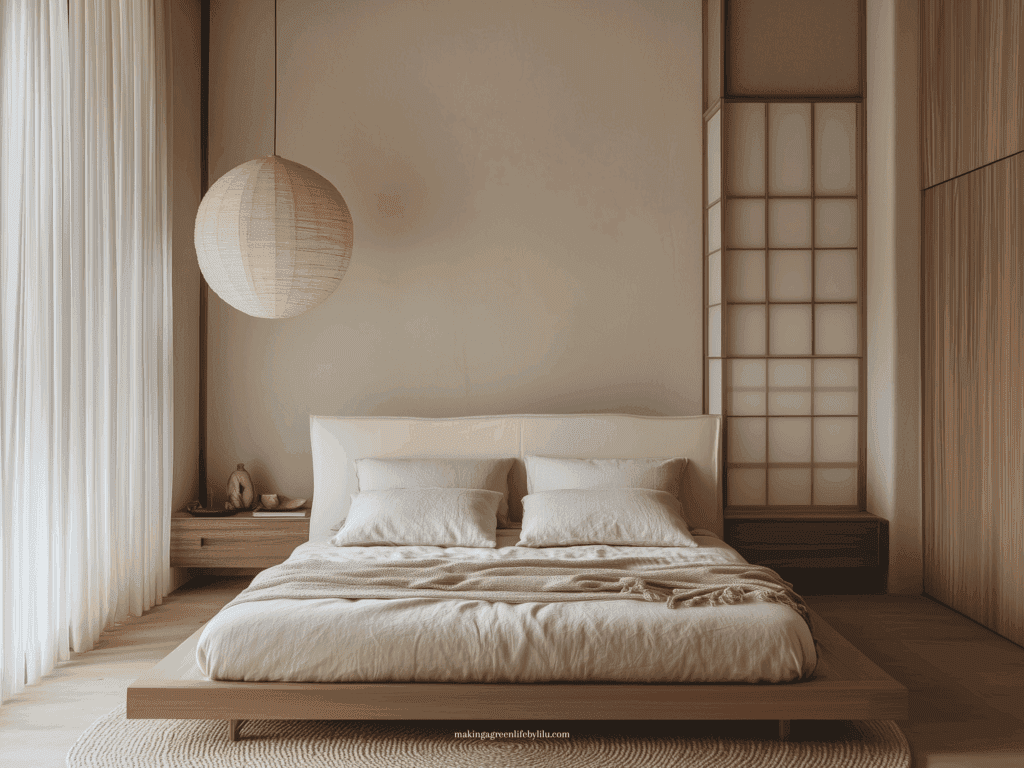
Nature is at the heart of Wabi-Sabi. But rather than imitating it through prints and artificial plants, this philosophy asks us to engage with nature more directly by allowing the outside world to influence how we live inside. A Wabi-Sabi bedroom doesn’t need a garden view to feel natural. Instead, it invites the rhythms of the seasons, the imperfections of organic elements, and the shifting light of the day into the room’s design.
This begins with observation. Take a moment to consider how your room responds to nature. How does the light change in the morning versus the evening? Where does the sun fall? Is there a corner that’s always cool? These moments matter. If your bedroom gets strong morning light, perhaps your bed should face that window to help you wake gently. If the light is softest in the afternoon, create a reading corner that glows at that time. The Wabi-Sabi mindset encourages you to let the natural qualities of your space guide your choices—rather than forcing a layout based on symmetry or trend.
Next, look to the seasons. Wabi-Sabi design is never static; it evolves. This doesn’t mean redecorating four times a year. It means allowing seasonal details to flow through your space. In spring, bring in a simple glass of foraged blossoms. In summer, fold back the heavier linens and introduce sheer curtains. In autumn, place a dry leaf or seed pod in a ceramic dish. In winter, keep your textiles layered and add natural candlelight. These aren’t decorative gestures, they’re rituals of connection. Natural objects also play a quiet, grounding role in the Wabi-Sabi bedroom. A branch with peeling bark, a piece of driftwood, a river stone, or a sprig of herbs can all serve as focal points without needing any styling. Simply placing them where you’ll see them on a shelf, windowsill, or bedside table creates a moment of awareness. These organic materials don’t demand attention. They simply are. And in their stillness, they remind you to be still too.
#6. Curate Quiet Moments of Ritual and Reflection
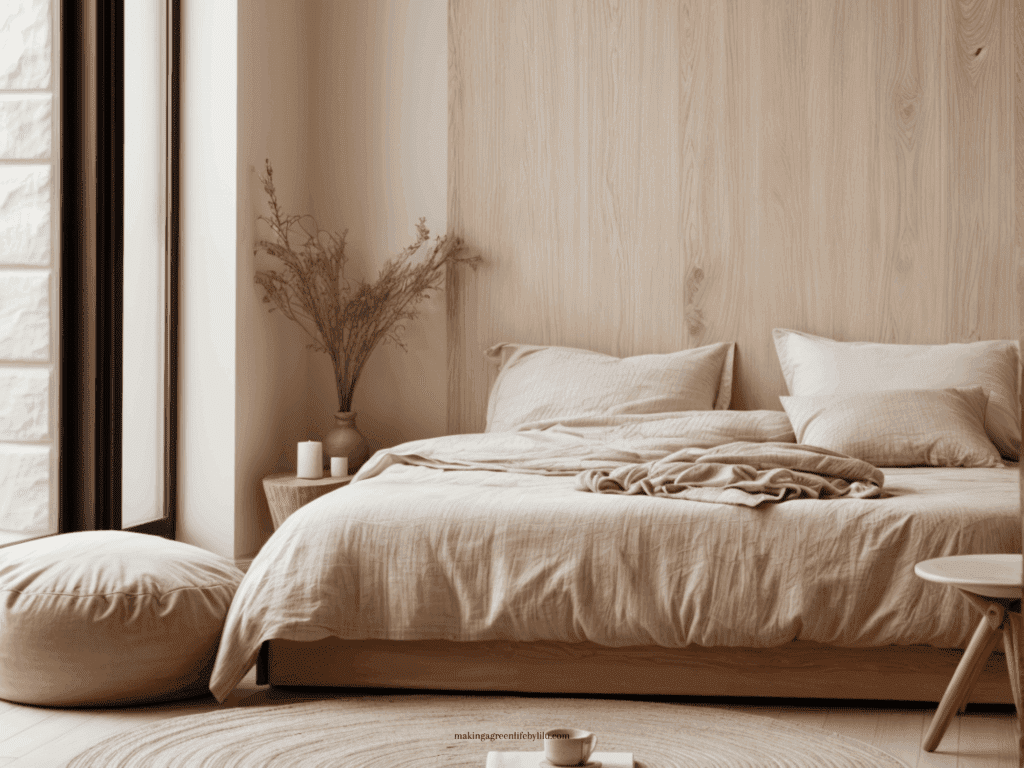
A Wabi-Sabi bedroom isn’t just a physical space; it’s an emotional refuge. Beyond the bed, beyond the walls, it’s a place that allows you to reconnect with yourself. That sense of reconnection comes not from expensive décor or flawless design, but from small, intentional rituals woven into everyday life. These rituals bring stillness. They offer rhythm. And they turn ordinary routines—getting dressed, turning down the bed, drinking tea into meaningful pauses in an otherwise fast moving world.
To begin, ask yourself: what are the first and last five minutes of your day like in your bedroom? Are they calm or chaotic? Restorative or rushed? Wabi-Sabi encourages you to create quiet rituals around these two anchor points in the day. You might start with something as simple as placing a small bowl on your bedside table to drop your jewellery into each night. Or folding your blanket each morning, not because it looks tidy, but because it feels respectful to the space.
These rituals don’t need to be elaborate. Even the act of lighting a candle in the evening can shift your energy. Choose a beeswax candle or one made from essential oils, something with a soft, grounding scent. Sandalwood, hinoki, or vetiver all echo the natural, earthy qualities of Wabi-Sabi interiors. Let lighting the candle signal a transition from activity to rest. You don’t need to “meditate” for the space to become meditative. The act of slowing down is enough.
Another way to cultivate ritual is to create a reflection point in your room. This could be a chair by the window, a floor cushion in a corner, or simply a section of the bed where you sit with a warm drink. The purpose isn’t productivity, it’s presence. You don’t need to journal or stretch unless it feels right. Just five minutes of doing nothing, with no phone in hand, no goal in mind. These micro moments are what make Wabi-Sabi spaces so powerful: they offer permission to simply be.
Even storage can become ritualistic. Choose a woven basket for items you want to put away at the end of the day, like loose papers, electronics, or scattered clothes. Not as a chore but as a soft conclusion to the day. You’re not cleaning for cleanliness’s sake. You’re closing a loop. This kind of care, repeated daily, transforms not just your room, but your sense of control and calm within it. Try creating a seasonal vignette somewhere visible. This could be a shelf with a few meaningful items, a favourite book, a handmade bowl, a stone from a recent walk. Change it every few months, not to match a trend but to reflect how you feel. These curated moments are not about aesthetics; they’re about reflection. They are small reminders of your own evolving self, made visible in your environment.
Ritual can also take the form of lighting. If you tend to use harsh overhead lighting in the evenings, shift to lower sources. A bedside lamp, a floor lantern, or a wall sconce with a dim glow encourages stillness. If you like to read before bed, try placing a worn bookmark in your current book and leaving it open beside your pillow. This small act turns reading into an invitation, not a task.
There’s a deep peace in repetition. The more you repeat a comforting ritual in your bedroom, the more the space holds that energy. Your room becomes more than a backdrop. It becomes a collaborator in your rest and renewal. In Wabi-Sabi, beauty doesn’t come from what you add; it comes from what you pay attention to. And quiet rituals are one of the purest forms of attention. They remind you to pause. To notice. To soften. A cup of tea, a breath by the window, the way light hits the floor, these are the moments your bedroom should hold space for.
#7. Designing for Longevity and Emotional Connection
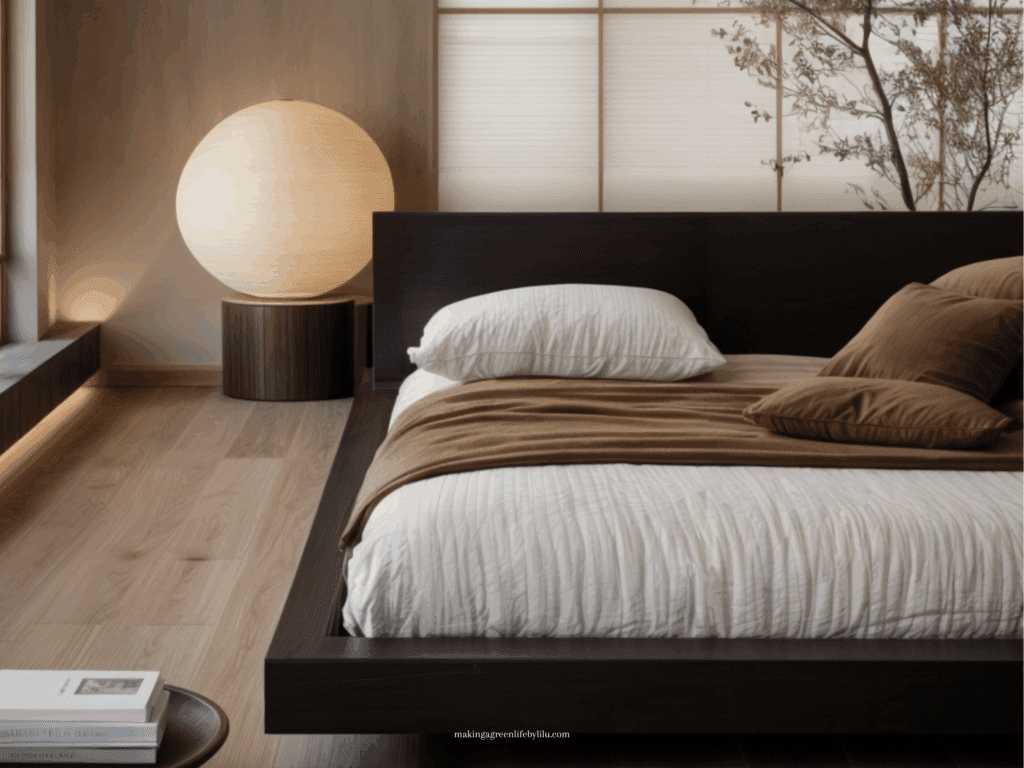
A Wabi-Sabi bedroom is not something you finish. It’s not an end product; it’s a living, breathing space that grows alongside you. Unlike trend based interiors that encourage seasonal reinvention, Wabi-Sabi embraces stillness, ageing, and emotional continuity. At its core, it’s about designing for longevity, not just in how things last, but in how they continue to support your wellbeing over time.
Longevity in design starts with honest materials. In a Wabi-Sabi bedroom, the objects you live with are chosen not because they’re fashionable or impressive, but because they feel good to live with day after day. A handmade bedside table may not be perfectly square, but its surface carries the marks of time and the warmth of the hand that made it. A solid wood frame might scratch or dent, but it won’t fall apart like veneer or plastic. And that matters. When you invest in objects that endure, they begin to carry your story too.
This approach doesn’t require spending more. In fact, it often means buying less. Choose one beautiful blanket instead of three cheap throws. One handmade lamp instead of two mass produced ones. One pair of well made slippers you always wear. Wabi-Sabi doesn’t chase novelty, it values consistency. When your bedroom is built around a few well-loved, well-chosen things, it holds a steady rhythm. You know where things are. You know how they feel. That familiarity breeds peace.
Equally important is designing with emotional connection in mind. What makes a Wabi-Sabi bedroom feel grounding isn’t how it looks, it’s how it reminds you of who you are. The book you’ve read ten times. The chair you sit in to write or think. The photograph on the wall that no one else would frame but you. These objects may not mean anything to anyone else, and that’s what makes them powerful. Their value is not decorative; it’s emotional.
To design for longevity, also consider how your needs might shift over time. Can your bedroom flex with you? Can that bedside stool become a reading perch? Can that woven basket store your partner’s books as easily as your own? When items are multipurpose and spaces are loose, your bedroom can evolve without needing to be completely rethought. That fluidity is part of what makes it resilient.
Maintenance plays a quiet but meaningful role in Wabi-Sabi longevity. This isn’t about constant upkeep. It’s about small acts of care. Dusting a shelf gently. Mending a ripped pillowcase by hand. Oiling a wooden drawer once a year. These rituals are not just about preserving objects; they’re about tending to the relationship you have with your space. When you care for your room, it cares for you in return. And finally, longevity means letting go of the pressure to always update. When a room is rooted in meaning and purpose, you don’t feel the need to change it every season. You live with it. You notice how it shifts with the light. You fall in love with it quietly, repeatedly, because it reflects who you are—not who a magazine says you should be.
The Wabi-Sabi bedroom is not about achieving a perfect aesthetic. It’s about creating a space that can hold you today, tomorrow, and in the years to come. It’s about choosing things that age beautifully, mean something, and support your daily rituals. It’s a room that doesn’t perform for anyone. It simply exists and makes you feel more human for existing within it. Designing for longevity and emotional connection is not about effort. It’s about care. And when your bedroom reflects that care, it becomes one of the most supportive spaces in your life.
Final Thoughts on How to Create Wabi-Sabi Bedroom
Creating a Wabi-Sabi bedroom isn’t about following design rules, it’s about finding your rhythm. It’s a quiet rejection of pressure, perfection, and performance. In its place, it offers presence, patience, and peace. Through natural materials, imperfect textures, and simple rituals, your bedroom becomes more than a space to sleep. It becomes a space to return to yourself.
You don’t need to renovate or start over. You simply need to begin noticing. Notice what feels calm. What feels real. What helps you slow down. Let your room evolve gradually. Let it soften. Let it reflect your life, not an idealised version of it, but the one you’re living right now. Because a Wabi-Sabi bedroom doesn’t ask you to change who you are. It simply holds space for you to be.
Related Japandi Articles:
- 5 Japandi Spring Colour Palettes to Refresh Your Home for the Season
- How To Create Family-Friendly Japandi Home
- The Role of Negative Space in Japandi Design: A Scientific Perspective
5 Brilliant Ways To Use Wood Wall Panelling In Japandi Style Home
5 Reasons You Should Opt for Wood Slat Panelling for Your Japandi Home
5 Ways to Create A Zen-Like Peaceful Environment in Your Japandi Home
- 5 Steps You Should Consider When Choosing A Bed For Japandi Bedroom
- Why More Craftmanship in Japandi?
- Colours of Japandi Design
Where to Buy Sustainable Japandi Furniture in the UK and Netherlands
How to Create Wabi-Sabi Bedroom

One Comment