Create a Calm Yoga Studio Using Japandi Design
A yoga studio should be more than a place to move; it should be a space that helps people feel. It’s where breath slows, minds clear, and bodies come home to themselves. But the environment that holds those moments matters deeply. When a studio feels cluttered, overly styled, or too stark, it can pull practitioners out of presence. What if instead, your yoga studio could feel like a sanctuary, calm, grounded, and quietly beautiful? That’s where Japandi design comes in.
Blending Japanese minimalism with Scandinavian warmth, Japandi offers the perfect balance of simplicity and softness. It’s not just a style, it’s a feeling. It encourages mindful movement, deep stillness, and thoughtful rituals. When applied to a yoga space, Japandi helps create an atmosphere where people can let go of distraction and reconnect with the moment.
- The Perfect Match: Why Japandi Design Creates the Ultimate Yoga & Pilates Space
- Slow Living Starts at Home: The Lifestyle Behind Japandi Design
- How to Create Japandi Meditation Spaces for A Mindful Lifestyle
In today’s blog, you’ll learn how to transform your yoga studio into a Japandi sanctuary. From choosing calming materials and earthy textures to integrating Japandi wallpaper that adds visual softness, we’ll explore practical, beginner-friendly ways to bring this timeless aesthetic into your space. Whether you’re revamping a commercial studio or creating a home based practice room, these steps will help you design with purpose and peace.
#1. Start With Stillness, Declutter the Energy, Not Just the Room

Before you buy anything or move furniture, begin by removing what doesn’t belong, not just visually, but energetically. Japandi spaces are rooted in simplicity, but not the kind that feels sterile. The goal is to make space for breath. In a yoga studio, that means editing your space until nothing distracts from the practice.
Look around your studio and ask: what’s creating visual noise? That might be mismatched decor, too many props on open display, or bright artwork that doesn’t support your intention. Don’t think in terms of minimalism for trend’s sake, think about clarity. The space should offer your students room to breathe, physically and mentally.
Store props in closed units if possible, or use natural materials like wooden crates or linen baskets to hide visual clutter. Keep only a few essentials in sight, a handmade singing bowl, a folded blanket, a ceramic incense holder. Let these objects be functional and grounding.
Japandi design also invites emotional editing. Are there items in your space that were once useful but now feel heavy? Let them go. A studio that supports stillness starts with decisions made in presence. What remains should feel calm in the body, not just clean to the eye. This phase is not about perfection. It’s about intention. Creating a Japandi sanctuary starts with creating space. Once the unnecessary is gone, you can begin building beauty from the bones of calm.
#2. Use Japandi Wallpaper to Add Texture and Visual Warmth

In Japandi interiors, texture is everything. It softens the edges of a minimalist space, adds quiet rhythm to a room, and creates emotional depth without adding clutter. For a yoga studio, where stillness and sensory awareness are at the heart of the experience, the right textures can transform the way people feel the moment they step inside. And one of the most effective ways to introduce this softness without overwhelming the space is with Japandi wallpaper.
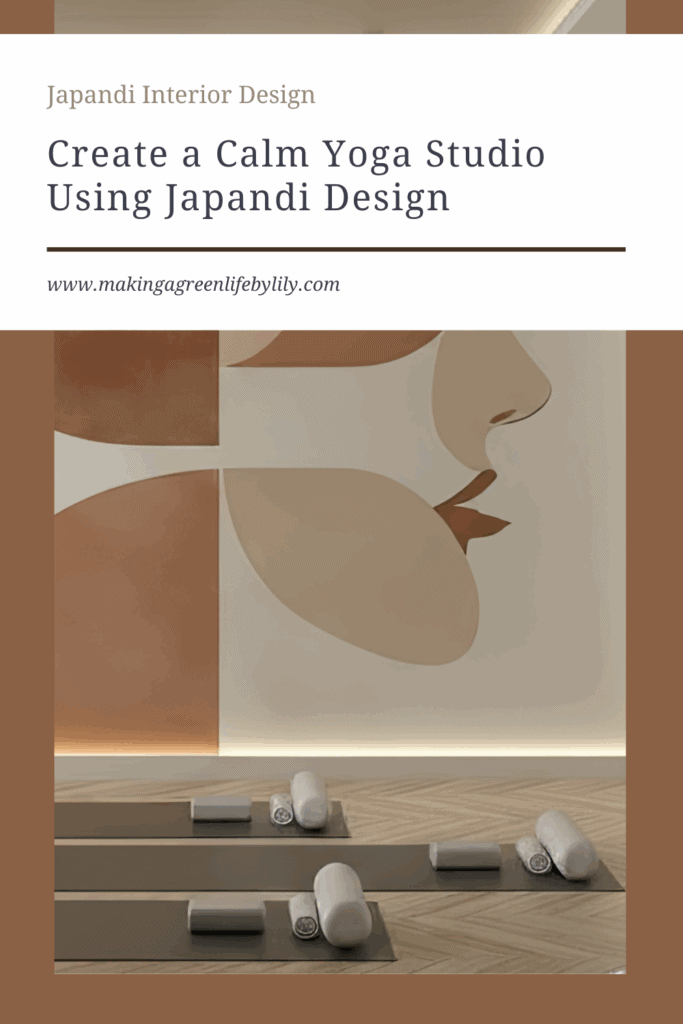
Unlike traditional wallpaper, which is often decorative or attention grabbing, Japandi wallpaper is subtle, grounding and designed to be felt as much as seen. Think soft, earthy tones like sand, clay, stone, and sage. Think organic patterns that echo raked gravel, flowing textiles, or natural wood grain. The wallpaper doesn’t become the focus of the room; it becomes the backdrop to stillness.
If you’re worried wallpaper might feel “too much” for a yoga space, consider using it on a single accent wall. This could be the wall behind your altar, the entryway, or the back of the room where students rest in savasana. A Japandi style mural with a calm gradient, a handmade texture, or a repeating motif inspired by nature can act as a visual anchor. It draws the eye gently without ever disrupting the sense of presence.
Another way to use Japandi wallpaper effectively is to choose a peel-and-stick version. These options are ideal for renters or studio owners who want the flexibility to change their environment seasonally. Many Japandi wallpapers are also eco-friendly and printed with non-toxic inks, an important consideration for wellness spaces where air quality and ethical sourcing matter. Consider pairing your wallpaper with natural finishes in the rest of the studio: raw wood shelving, linen curtains, or handmade ceramics. The wallpaper shouldn’t compete with these elements, it should echo them. The result is layered calm. A space that doesn’t shout, but hums.
One of the most overlooked benefits of Japandi wallpaper is how it controls light. A textured wall in a soft tone reflects light in an uneven, organic way. Rather than flat brightness, it creates warmth and depth especially when paired with paper lanterns or soft wall sconces. The room begins to glow. And that glow invites your students to soften. Whether you choose a subtle woven print, a calming landscape, or a barely, there pattern that mimics clay or linen, Japandi wallpaper has the power to change the emotional temperature of a room. It’s a small shift with a big impact. And perhaps the most powerful part? It brings beauty without adding bulk. In a yoga studio, where every inch of floor space counts, the walls can do the emotional heavy lifting, inviting stillness, softness, and subtle inspiration without ever getting in the way.
#3. Choose Natural Materials for Movement and Mindfulness

In a yoga studio, the body is in constant dialogue with its surroundings. The textures underfoot, the warmth of the light, and the feel of the air, all these elements contribute to how grounded or distracted your students feel. Japandi design excels here. By favouring raw, natural materials over synthetic finishes, it enhances that connection between body, breath and space. And that’s exactly what a yoga sanctuary should support.
Start with the floor. If you’re lucky enough to have wood floors, celebrate them. Don’t cover them up with synthetic finishes. Sand them lightly if needed, and leave the grain exposed. The organic warmth of timber is naturally calming and supportive. It holds heat, absorbs sound, and invites bare feet. If your flooring is concrete or tile, consider adding a layer of softness with natural fibre rugs, jute, seagrass or wool, all in muted, earthy tones that don’t interrupt the stillness of the room.
Yoga props are often an afterthought in studio design, but in a Japandi sanctuary, they become part of the aesthetic. Choose blocks made of cork or bamboo instead of foam. Opt for bolsters wrapped in linen or cotton rather than synthetic fabrics. Roll your mats in a woven basket rather than stacking them in plastic bins. These small details matter. They reinforce the message that the space is grounded in care for the practice, the planet, and the people who use it.
Shelving and storage are equally important. Japandi design relies on clean, functional lines but they’re never cold. Low-profile shelves in untreated wood or matte-finished metal blend form and function effortlessly. Closed storage can help hide clutter, while open shelving offers space for curated objects, a handmade incense burner, a stack of folded throws, or a ceramic vessel for water.
Even lighting should reflect this natural sensibility. Harsh ceiling lights should be replaced or at least softened with wall sconces, paper lanterns, or pendant lights made from rice paper or fabric. The goal is diffused, directional lighting that supports rhythm. Bright in the morning, soft by afternoon, and glowing in the evening. The kind of light that invites reflection, not performance. This attention to material doesn’t just support the design, it supports the practice. When your body moves in harmony with the textures around it, you settle faster. You notice more. You breathe deeper. And that is the true magic of Japandi, it creates space not just for movement, but for mindfulness.
#4. Create Ritual Through Layout and Flow

A well designed yoga studio doesn’t just look serene, it moves serenely. That doesn’t mean people are always in motion, but rather that every part of the space supports a natural, uninterrupted rhythm. Japandi design is fundamentally about flow: of light, of movement, of experience. In a yoga studio, this translates into a space where nothing feels jarring, where everything has a place, and where the design invites you to move with more awareness.
Begin by looking at how people enter your space. The first few seconds in the studio set the emotional tone. Is there room to pause at the door, remove shoes with intention, and transition from the outside world into something slower? Japandi sanctuaries often use soft boundaries, linen curtains, bamboo screens, or floor changes to signal shifts in energy. Even a simple natural fibre mat by the entrance can act as a subtle cue: you’re stepping into calm now.
From there, think about circulation. Are the walkways wide and free of obstruction? Is it easy to move from reception to practice area to changing room without bumping into shelves, signs or furniture? A Japandi space is never crowded. It’s not empty either but every item is considered. If something doesn’t support movement, remove it or reposition it. Let people glide, not navigate. Now consider the focal points of the room. Japandi doesn’t rely on grand gestures. It finds strength in small anchors: a simple altar with a branch in a vase, a sculptural light fixture in the corner, or a piece of Japandi wallpaper on one feature wall. These are not decorations, they are visual resting points. Their presence offers a moment of orientation, a way to return to centre without needing words.
Layout also supports group energy. Think about where the teacher will stand. Can they be clearly seen without standing under harsh lighting or in front of visual distractions? Can the mats be spaced with comfort in mind, not just capacity? Japandi design values proportion. Even in group classes, people should feel spaciousness around their bodies and in their line of sight. If you offer private sessions or meditation zones, use screens or low bookcases to create partial separation. Japandi doesn’t use hard walls unless necessary. It relies on changes in height, light or material to define zones without closing them off. A well-placed bench, a soft hanging curtain, or a patterned wallpaper panel can help define space while keeping the overall room open and breathable.
Above all, design with ritual in mind. Where do people rest their belongings? Can they prepare for class without rushing? Do you offer water in handmade glasses instead of disposable cups? Can you encourage quiet before class begins with warm lighting and grounding scent? These are not rules, they are rhythms. And Japandi design supports them with softness and simplicity. When your layout feels intuitive, the room begins to move like the practice itself, fluid, grounded and responsive. That’s what turns a yoga studio into a Japandi sanctuary. It’s not just what’s in the space, it’s how the space makes people feel as they move through it.
#5. Invite Stillness Through Sensory Details

True sanctuary isn’t created through silence alone, it’s built through subtle layers of sensory calm. In Japandi design, every sense is considered. The textures you touch, the light you see, the scent you breathe, and the quiet sounds around you all work together to support presence. In a yoga studio, where the body and mind are in constant dialogue, these details matter more than most realise.
Start with sound. Japandi interiors are naturally quiet, not through silence, but through softness. Use natural materials that absorb and diffuse noise. Wool mats, linen drapes, woven rugs, and wooden furniture all help to soften acoustics. If your studio is in a busy area, consider using shoji room dividers, wall hangings, or acoustic panels wrapped in organic fabric. Even placing woven baskets or ceramics strategically can help break up echo and make the room feel more grounded.
Scent is another powerful tool, especially in wellness spaces. Japandi sanctuaries often include natural fragrance, not overpowering, just present. Think Japanese hinoki, cedarwood, sandalwood, or soft herbal notes like sage and chamomile. Use a ceramic diffuser or incense holder that complements your décor. Even the act of lighting incense before a class becomes part of the ritual, helping students settle in with intention.
Touch is central to the yoga experience, so the surfaces in your studio should offer comfort and honesty. A hand carved bench by the door, a linen covered bolster, a tactile cup of herbal tea offered post practice each one invites your students to stay a little longer in their bodies. There’s no high gloss, no plastic sheen. Everything is real, warm, and just slightly imperfect. That’s where beauty lives in Japandi: in the feel of something made to be held. Temperature also plays a role in stillness. Avoid sudden shifts between hot and cold. Use soft lighting to warm the space, and allow your materials to help regulate comfort naturally. Timber absorbs and retains heat; stone tiles cool the body without creating a harsh contrast. Layering different textures allows you to create a space that feels balanced no matter the season.
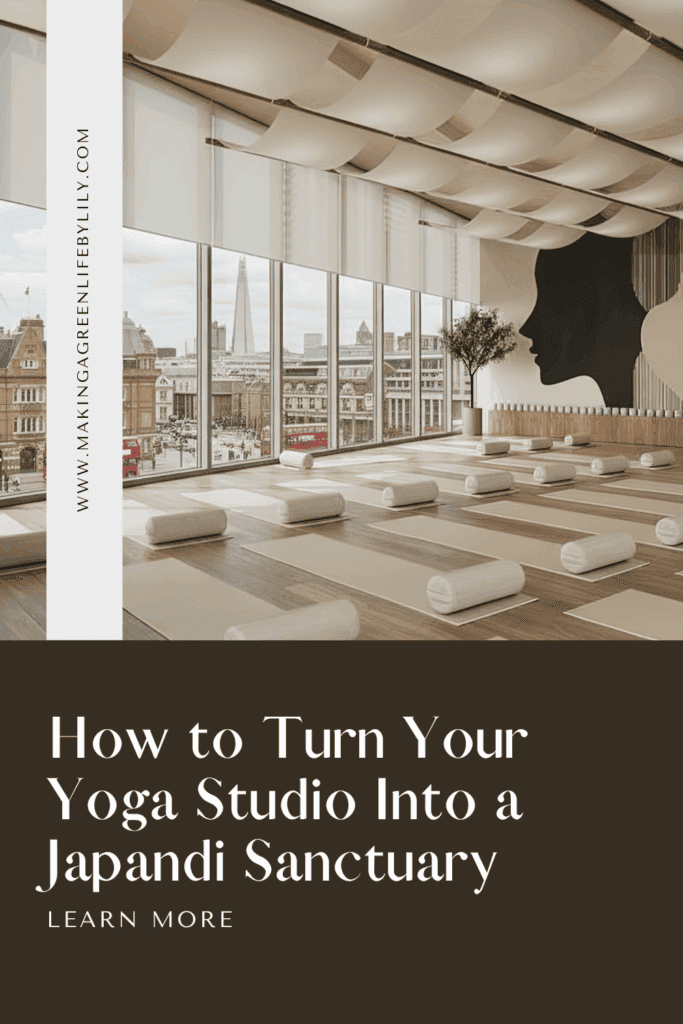
Even light should feel like a gentle rhythm. Let daylight filter in through gauzy linen curtains or rice paper blinds. In the evenings, use lamps with warm bulbs, nothing clinical or glaring. A Japandi studio glows, it doesn’t shine. Consider placing lighting low or behind furniture to mimic natural transitions between day and night. These small changes can dramatically affect how relaxed and focused your students feel.
Decorative elements, if used, should feel living, not staged. A single branch in a narrow vase. A dried floral arrangement with muted tones. A piece of hand-glazed pottery with a soft curve. These details aren’t there to impress, they’re there to hold presence. They act as visual anchors during meditation, or gentle reminders that perfection isn’t required. Lastly, offer moments of stillness beyond the mat. A corner with a cushion and a ceramic cup. A slow drip of water from a fountain. A hand towel made of raw cotton. Japandi design isn’t just about how the studio looks, it’s about how it invites the nervous system to slow down. And it’s in these quiet, sensory decisions that your studio transforms from a room of movement into a place of healing.
When all the senses are gently supported, students don’t have to try to relax; it simply happens. That’s the beauty of Japandi design in a yoga space. It creates an atmosphere where stillness is remembered.
Final thoughts on How to Turn Your Yoga Studio Into a Japandi Sanctuary
A yoga studio is more than four walls and a few mats. It’s a space where people come to breathe, soften, and return to themselves. By embracing Japandi design, you offer more than aesthetic appeal—you create an environment that supports deep rest, intentional movement, and meaningful connection.
Japandi is not about following a trend. It’s about stripping away what’s unnecessary and thoughtfully layering what nurtures calm. Through natural materials, simple flow, subtle lighting, and tactile beauty, your studio becomes a sanctuary. Not only for your students, but for you, too.
And when you include Japandi wallpaper—textured, tonal, and timeless—you add a grounding backdrop that carries the spirit of stillness into every corner of the room. It’s not just design. It’s energy. Its presence.
Turning your yoga studio into a Japandi sanctuary isn’t about perfection. It’s about creating space for peace to arise naturally. Slowly. Softly. And once it’s there, your students won’t just notice it—they’ll feel it.
Related Japandi Articles:
- 5 Japandi Spring Colour Palettes to Refresh Your Home for the Season
- How To Create Family-Friendly Japandi Home
- The Role of Negative Space in Japandi Design: A Scientific Perspective
5 Brilliant Ways To Use Wood Wall Panelling In Japandi Style Home
5 Reasons You Should Opt for Wood Slat Panelling for Your Japandi Home
5 Ways to Create A Zen-Like Peaceful Environment in Your Japandi Home
- 5 Steps You Should Consider When Choosing A Bed For Japandi Bedroom
- Why More Craftmanship in Japandi?
- Colours of Japandi Design
Where to Buy Sustainable Japandi Furniture in the UK and Netherlands
How to Turn Your Yoga Studio Into a Japandi Sanctuary