The honest answer to the questions people search for most, and what it means for your space
If you’ve found yourself typing “what is tatami” into a search bar, you’re usually looking for one of two things. Either a quick definition, or something more useful: a sense of whether tatami belongs in your home, and if so, how.
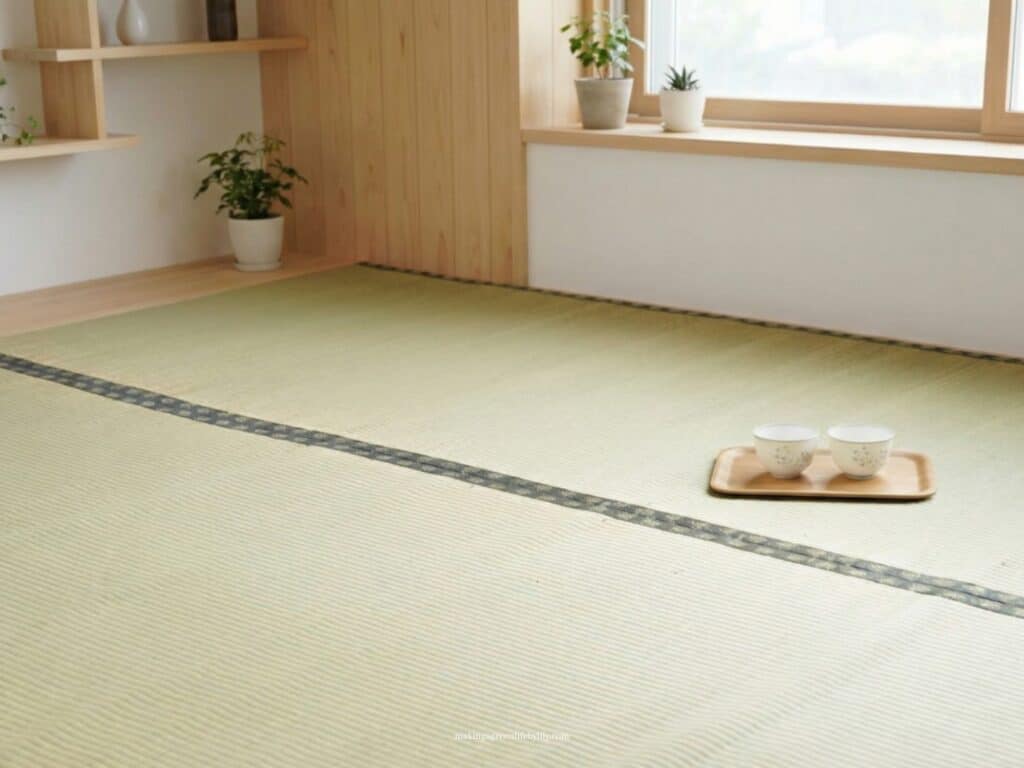
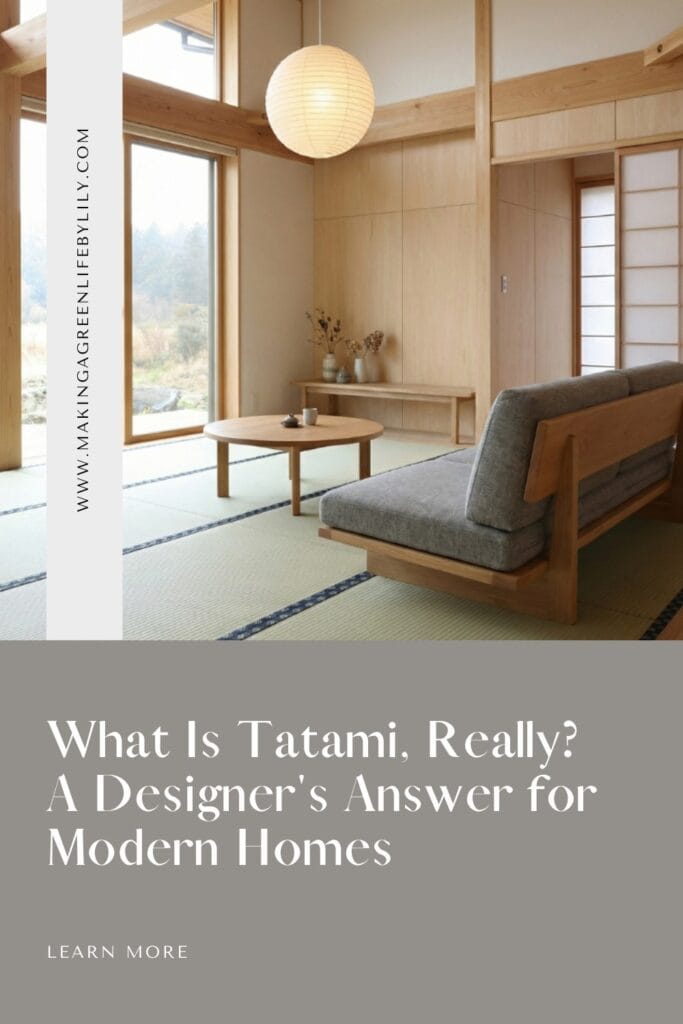
The quick definition is easy. Tatami is a traditional Japanese flooring material made from igusa, a rush grass, compressed and woven into firm, rectangular mats. It’s been used in Japanese homes for centuries, first as a luxury, later as a standard. It has a characteristic scent, a specific texture, and a particular way of making a room feel different from a room without it.
- Modern Tatami: 7 Ways to Use Tatami Mats in a Japandi Interior Without Going Full Zen Temple
- Why Tatami Is Not Just a Traditional Japanese Material
- 5 Benefits of Using a Tatami Rug in Your Home
The more useful answer is what I want to give you here.
What tatami actually is, in plain terms
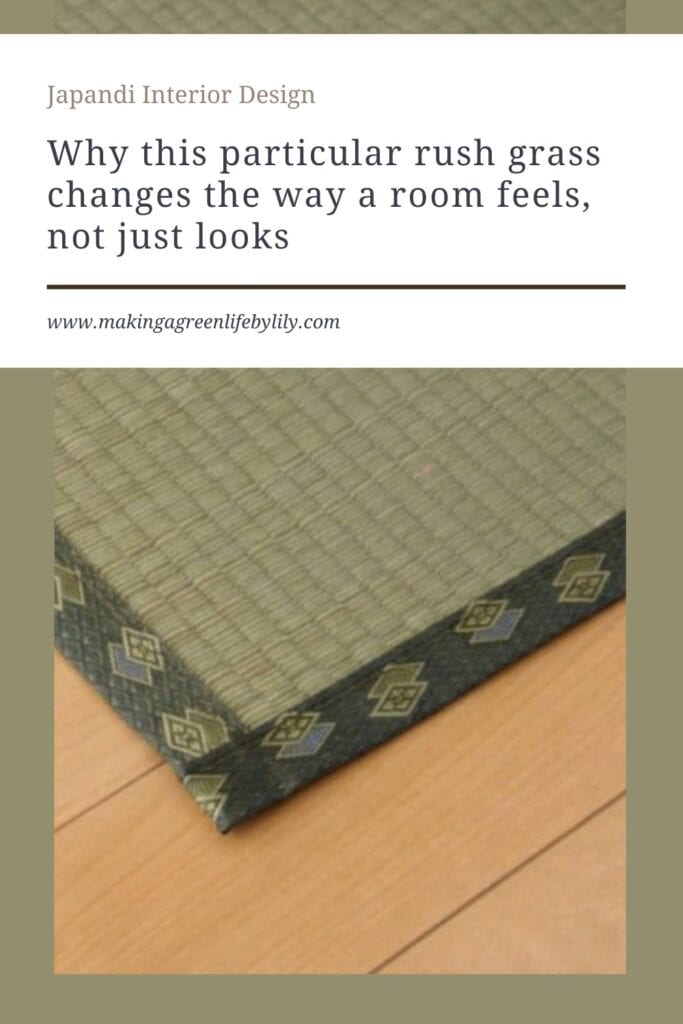
A traditional tatami mat is built in layers. The core is a compressed rice straw base, firm but with a slight give. Over that sits the igusa weave, the smooth, pale green surface that gives tatami its look, feel, and smell. The edges are finished with a fabric border, traditionally in dark cotton or silk.
Tatami has a grain, like timber does. The weave runs in one direction, and the surface changes appearance depending on which way the light hits it. This is part of what makes tatami rooms feel different at different times of day. The floor itself is doing something with the light.
The size of a traditional tatami mat was historically used as a unit of room measurement in Japan. Rooms were described by how many mats they held. A six-mat room, an eight-mat room. The proportion of the mat was considered in relation to the human body and the furniture that would be placed on it. That kind of considered thinking about scale and material is, I’d argue, very Japandi, even if the word didn’t exist then.
What is a tatami room used for?
In Japan, a tatami room has traditionally served as a multi-purpose space: a place to sleep (futons laid on the mats), to eat, to receive guests, to practise tea ceremony. The floor was the furniture, in a sense. Low tables, floor cushions, nothing that required the mats to bear heavy concentrated weight for long periods.
In a modern Western context, this translates differently. Most of us aren’t replacing furniture with futons. But the underlying idea, a considered, low, calm space where the floor material itself contributes to how the room functions, is something that translates very directly into Japandi design.
A tatami room in a contemporary home might be a reading room. A meditation space. A space for children to play on the floor without the hardness of timber or tile. A dining room with low seating. The material doesn’t dictate a single use. It dictates a certain quality of presence.
How tatami translates to a modern Western home
The most practical way to bring tatami into a home that isn’t built for it is through a tatami rug rather than a full tatami floor. A tatami rug is made from the same igusa material, woven in the same way, but sized and finished as a rug rather than as a permanent floor installation. It sits on top of your existing floor and can be moved or repositioned as the room changes.
This is what I’ve been working on for my own product line, and why I’ve spent a lot of time thinking about how igusa performs outside its traditional context.
A tatami rug in a living room brings the sensory qualities of the material into the space, the scent, the texture, the acoustic softening, without requiring any permanent changes. It works under a dining table, in the centre of a seating arrangement, or beside a bed as a landing surface for bare feet in the morning.
I’ve written in more detail about the specific things a tatami rug does for a room in my earlier post on what a japandi rug actually does, if you want to go further. And the five benefits of a tatami rug covers the practical side in plain terms.
The difference between a tatami mat and a tatami rug
A tatami mat is a fixed floor component, sized to fit a specific room layout, installed edge-to-edge as the primary floor surface. It’s permanent, or close to it, and the room is designed around it.
A tatami rug is igusa in a format that works within an existing home. The material is the same. The weave, the scent, the texture, all the same. But the format is flexible. Standard rug sizes. Finished edges. Something you can choose and place without structural changes.
This distinction matters if you’re reading about tatami and wondering whether it has any place in a home that isn’t Japanese in its architecture. It does. The rug format is specifically designed for that situation.
The one thing to know: look for rugs that use real igusa rather than synthetic alternatives that mimic the look. Synthetic versions can approximate the visual but not the scent, the acoustic quality, or the natural moisture management that makes igusa worth choosing in the first place.
Final Thoughts on What Is Tatami, Really? A Designer’s Answer for Modern Homes
What is tatami? At its simplest, it’s a flooring material made from a rush grass with centuries of use behind it. At its most interesting, it’s a surface that makes a room smell, sound, and feel different from any other floor covering you’ll find. That combination is not something you can replicate with a synthetic or even most other natural fibres.
If you’re curious about bringing it into your home and want a hand thinking through where and how, my e-design service is here for exactly that kind of conversation.
Related Japandi Articles:
- 10 Unexpected Ways to Use Wallpaper in a Japandi Home
- How To Create Family-Friendly Japandi Home
- The Role of Negative Space in Japandi Design: A Scientific Perspective
What Is Tatami, Really? A Designer’s Answer for Modern Homes