
Last Updated on 18 July 2026 by makingagreenlifebylily
The actual routine I use, and why most tatami care advice online is either too vague or quietly wrong
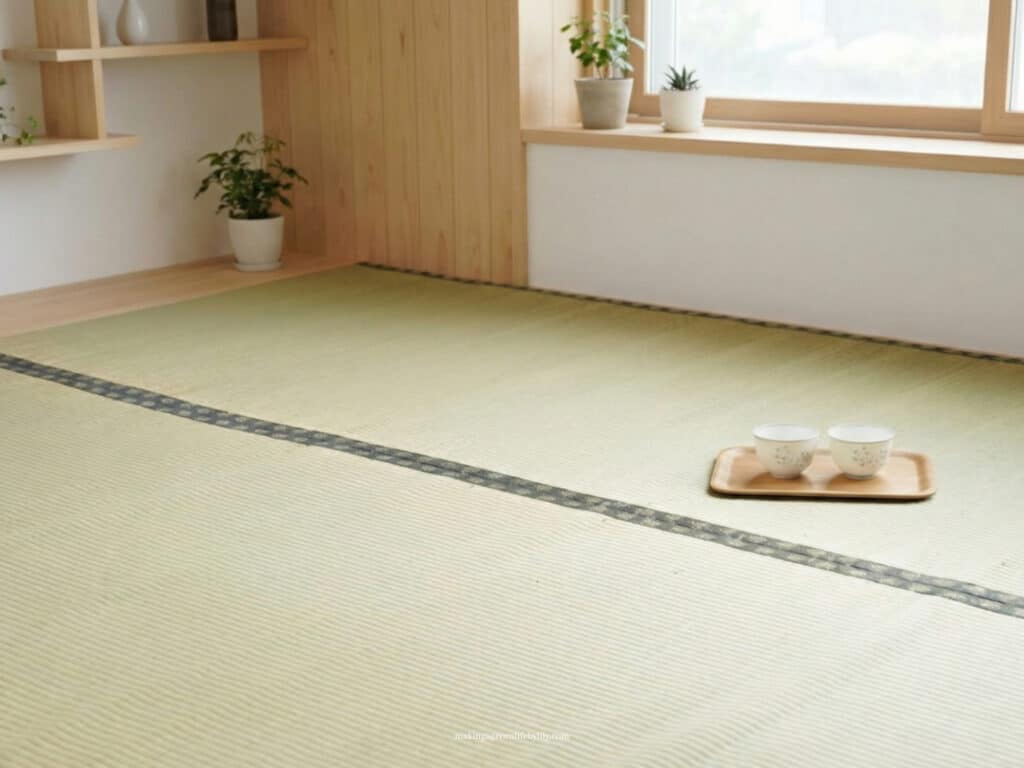
I’ve been living with tatami underfoot in my own home for long enough now that the care routine has become second nature, the way caring for any natural material does once you understand how it behaves rather than just following a list of rules. What I want to give you here is not a generic care guide. It’s what I actually do, what I’ve learned from watching igusa respond to different environments and cleaning approaches, and the specific mistakes I’ve seen people make, usually from following well-intentioned but imprecise advice.
- Igusa, Tatami, and the Quiet Science of Natural Fibres Underfoot
- The Wellness Benefits of Igusa You Probably Didn’t Know
- Tatami vs Traditional Rugs: The Side-by-Side I Wish I’d Had Years Ago
The headline is that igusa is far less demanding than most people expect. It doesn’t need specialist products, it doesn’t need professional cleaning, and it doesn’t need constant attention. What it needs is the right kind of attention at the right moments, and a clear understanding of what harms it. Get that right, and a tatami rug or tatami mat will reward you with years of use and honest, gradual ageing.
What tatami actually needs day to day
The daily reality of caring for tatami is that most days it needs nothing at all. This surprises people who have come from caring for pile rugs, which trap dust, food particles, and pet hair deep in their fibres and need regular vacuuming to stay clean. Igusa’s flat, tightly woven surface doesn’t trap the same way. Dust and debris sit on the surface rather than in it, which makes them easier to remove but also more visible, particularly in low light when the weave catches the angle of the sun.
My daily habit is simply to keep the area swept or vacuumed once or twice a week, always working with the grain of the weave rather than across it. The grain runs in one direction on a tatami mat, and you can see it clearly in raking light: the surface changes slightly in tone depending on which way you’re looking at it. Working with the grain, rather than against it, lifts surface debris effectively without stressing the fibres. A soft brush attachment on a vacuum, used at low suction, is ideal. A stiff-bristle brush works against the grain and gradually damages the surface weave, which is why I don’t use one.
For areas with higher traffic, a pass with a barely damp microfibre cloth along the grain, once a month or so, lifts any residual surface dust that vacuuming misses. I emphasise barely damp because this is a step where people commonly go wrong: too much moisture, even from a cloth that feels only slightly wet, can leave marks on igusa if left without adequate ventilation to dry it. The cloth should feel cool and just moist to the touch, not wet.
Spills and spot cleaning: my exact process
I’ve written about this in more detail in my post on tatami in a home with children, but it’s worth summarising here because the spill response is the single most important care skill for tatami.
When liquid lands on igusa, act immediately. The sooner you respond, the better the outcome. Take a clean, dry cloth and press it firmly onto the spill without rubbing. Hold it in place for several seconds to draw the moisture up into the cloth rather than spreading it laterally through the weave. Lift the cloth, fold to a dry section, and press again. Repeat until no more moisture is transferred. Then allow the area to dry completely with good air circulation.
For anything more stubborn than water or a pale liquid, once the initial moisture is removed and the area is dry, a small amount of rice bran soap on a barely damp cloth, worked very gently along the grain, is the safest cleaning agent I’ve found. Rice bran soap is mild, slightly moisturising to the fibres, and doesn’t leave a residue that attracts further dirt. I keep a small bar of it in the cleaning kit I use for tatami specifically.
Never use vinegar. This comes up in almost every natural cleaning resource, and it is wrong for igusa. The acidity in vinegar breaks down the natural oils in the rush grass, accelerates the yellowing process, and weakens the fibres over time. The same applies to lemon juice and any strongly acidic cleaner. Similarly, avoid bleach or any bleaching agent, which discolours igusa irreversibly. And never use a steam cleaner, which drives moisture deep into the weave and the backing, where it can remain trapped and eventually cause mould if the mat isn’t fully dried immediately.
Protecting the scent and freshness of igusa
The scent of igusa is one of its defining qualities: faintly grassy, slightly sweet, with a quality that’s almost impossible to describe to someone who hasn’t experienced it. It’s strongest when the tatami is new, and it softens over the first year as the mat settles. A trace of it remains even after several years of use, particularly when the room is warm, and the weave is slightly compressed by use.
The scent is also a signal. A healthy igusa mat smells like a meadow. An igusa mat that’s been left too damp, or that hasn’t had enough ventilation, begins to smell musty. This is early-stage mould, and it’s important to address it quickly. The fix is air and light: move the mat if possible, open windows, and allow it to dry thoroughly. Direct sunlight for a short period, an hour or two, not all day, will kill surface mould spores and restore the fresh igusa scent. Too much direct sunlight over many hours will fade the surface unevenly and accelerate the colour change from green to gold in patches rather than evenly, which is less beautiful.
In rooms where humidity is consistently high, a dehumidifier running for a few hours each week near the tatami is worthwhile. Igusa prefers moderate humidity: not the bone-dry conditions of a room with underfloor heating running at full strength, which makes it brittle, and not the damp air of a poorly ventilated ground-floor room, which risks mould. The middle ground, roughly 50 to 60 % relative humidity, is where igusa stays at its best.
What to never do: the definitive list
I’ve covered several of these through the post already, but it’s worth gathering the clear prohibitions in one place:
Never apply vinegar, lemon juice, or any acidic cleaner. It damages the fibres and accelerates yellowing.
Never use a steam cleaner. The moisture penetrates too deeply and doesn’t exit quickly enough.
Never rub at a spill. Blot and press only. Rubbing spreads the liquid laterally and pushes it deeper into the weave.
Never leave a wet cloth, damp towel, or anything moisture-retaining on tatami for more than a few minutes. Sustained contact with moisture is the primary cause of mould and staining.
Never place tatami directly over underfloor heating without a breathable layer between, and never run underfloor heating at high temperatures beneath it. The heat draws moisture out of the igusa too quickly, causing it to crack and become brittle.
Never vacuum across the grain at high suction with a bristle attachment. With the grain, on low suction, with a soft brush head only.
How tatami ages and what it looks like
This is worth addressing because ageing is sometimes mistaken for deterioration, and it isn’t. New igusa is pale, cool-toned, with a greenish quality and a strong scent. Over the course of six to twelve months of normal use, light exposure, and the natural process of the oils in the grass settling, it shifts toward a warm honey gold. The scent softens. The surface develops a slight lustre.
This colour transition is gradual and even in a well-cared-for tatami mat. If it’s uneven, with patches of different tones, the mat has been unevenly exposed to light or moisture. Direct sunlight on part of the surface for extended periods will fade that area faster than the surrounding weave, which creates a patchwork effect rather than the smooth, warm transition that aged igusa achieves when cared for well.
The transition to honey gold is, in my view, more beautiful than the original green. It works better with Japandi palettes: it sits comfortably with oak, warm white walls, linen, and undyed ceramics in a way that the cool green of new igusa doesn’t quite achieve. The room looks more like itself after a year than it did at the start.
Final thoughts on How I’m Caring for Tatami: Cleaning, Freshness, and What to Never Do
Tatami care is not complicated, but it is specific. The material rewards understanding over enthusiasm: more cleaning is not better, stronger products are not better, and moisture is the one variable that requires consistent care and attention. Work with the grain, act on spills immediately, keep the humidity moderate, and let igusa age at its own pace. It’s a natural material with genuine character, and the way it’s cared for will determine whether that character develops well or poorly over the years ahead.
For more on choosing tatami for a family room, my complete guide to tatami in a home with children covers placement, spill response and the sensory qualities of igusa in detail. And if you’d like to see the tatami rug I’ve made, you’ll find it at japandibymaglbl.com.
Related Japandi Articles:
- Tatami in a Home with Children: The Honest Guide
- What Is Tatami? A Designer’s Answer for Modern Homes
- Tatami vs Traditional Rugs: The Side-by-Side
- 5 Benefits of Using a Tatami Rug in Your Home
- Living Room with Tatami Flooring: Five Layouts
- The Wellness Benefits of Igusa You Probably Didn’t Know
- What a Japandi Rug Actually Does for a Room
How I’m Caring for Tatami: Cleaning, Freshness, and What to Never Do



One Comment