Why Some Japandi Rooms Feel Flat and How One Wall Fixes It
Japandi interiors are built on restraint. Soft neutrals. Natural wood. Honest materials. Clean lines. Negative space. When done well, they feel calm without effort. But sometimes, even when you follow every principle, a room can still feel slightly incomplete. It looks styled. It feels tidy. Yet something is missing. The instinct for many beginners is to add more decor. Another cushion. A larger plant. A statement lamp. But often the issue is not the objects within the room. It is the structure around them. Sometimes, what a Japandi room truly needs is weight. And that weight can come from one wall.
- 10 Unexpected Ways to Use Wallpaper in a Japandi Home
- 9 Exceptional Japandi Bedroom Wall Inspirations
- 5 Wall Ideas For Japandi Style Living Room
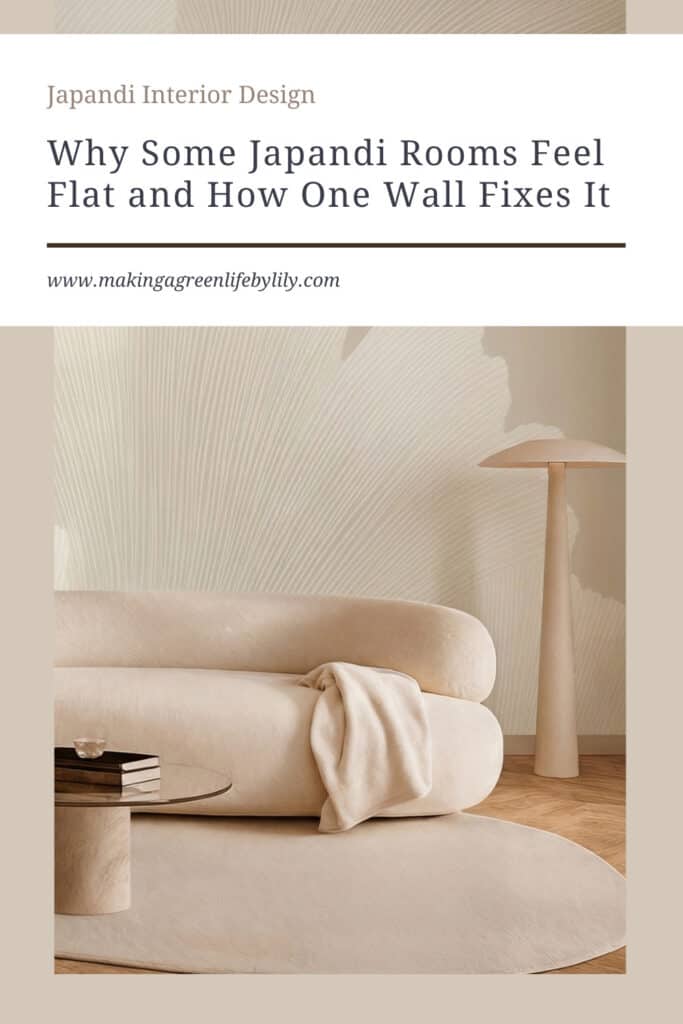
A mural, when approached thoughtfully, is not decoration. It is architecture. It anchors the room. It creates hierarchy. It deepens material contrast. It transforms the atmosphere. Let’s break down when a Japandi room needs a mural and how to recognise the signs.
#1. When the Space Feels Unfinished Rather Than Minima
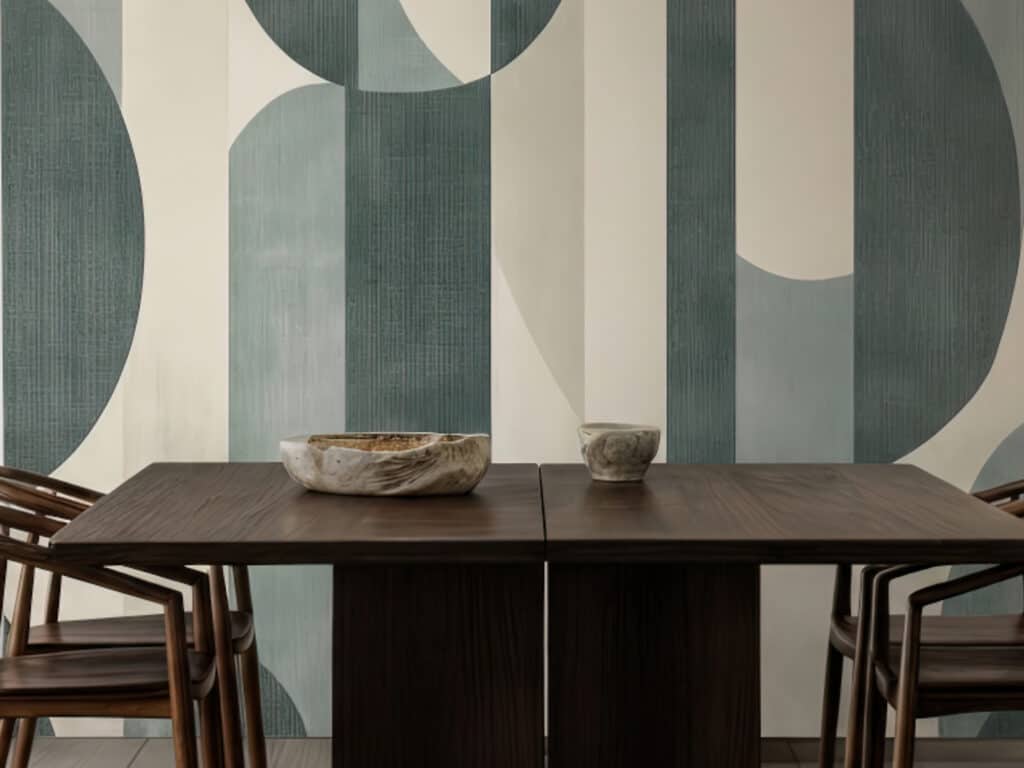
There is a delicate line between intentional minimalism and an unfinished room. In Japandi interiors, this line is especially subtle because restraint is part of the aesthetic. If a room feels unfinished, you may notice that the walls appear visually flat despite carefully chosen furniture. The seating area may look arranged, but not settled. The overall composition may lack depth when viewed from across the room. This often happens when walls are left in a safe neutral without variation. A warm beige or soft white may feel calm, but when every surface shares a similar tone, the room can begin to blur.
In these cases, adding small accessories rarely solves the issue. Accessories increase visual noise but do not add structural depth. A mural introduces a layered presence. The key difference is that a mural works at scale. It affects the entire visual field rather than competing with individual objects. Instead of scattering attention across decorative items, it gives the eye one grounded area to rest.
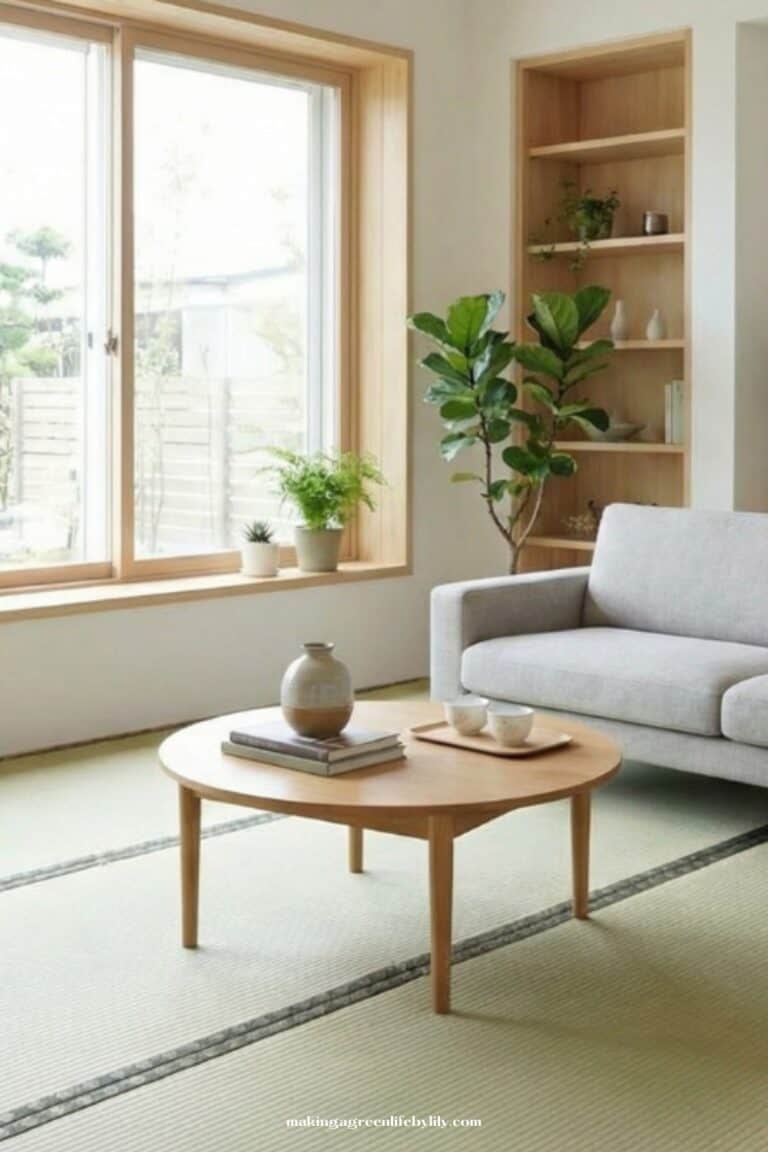
Think of it this way. In a Japandi living room, the furniture is usually modest. Low sofas. Simple tables. Subtle textiles. If the wall behind them carries no visual weight, the furniture can appear as though it is floating. A mural in a slightly deeper tonal range changes that perception. It frames the furniture. It creates contrast without clutter. It allows the room to feel composed rather than incomplete. Minimal does not mean empty. It means intentional. A mural can supply the missing layer of intention that plain walls sometimes lack.
#2. When the Architecture Lacks Natural Focal Weight
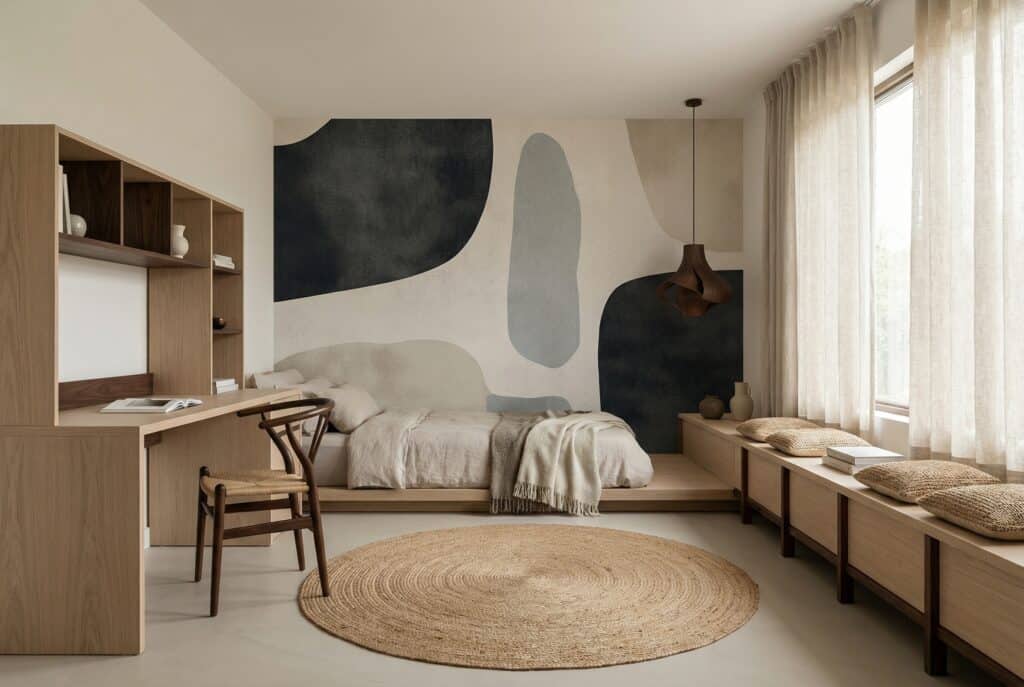
Some homes are gifted with architectural character. A fireplace. Exposed beams. Large windows. A textured stone feature. These elements naturally draw the eye and create a focal point. But many modern apartments are architecturally neutral. Flat ceilings. Smooth white walls. Minimal detailing. In such spaces, the architecture does not offer inherent weight.
In Japandi design, this can become a challenge. Because the furniture is intentionally understated, there may be no strong visual anchor. Without an anchor, the room can feel visually light and slightly directionless. The eye moves around without settling. The composition lacks hierarchy. A mural can replace the missing architectural feature. When placed behind a sofa or dining area, it acts as a quiet focal point. It gives the room a centre of gravity. It tells the eye where to rest first.
Importantly, this focal weight should not be dramatic. Japandi murals are not about bold graphics or high contrast patterns. They are about subtle depth. Large-scale abstract movement, stone-inspired textures, or soft tonal gradients work beautifully. The scale should be generous. Small repeating patterns break the calm and create a distraction. The mural becomes part of the architecture. It feels integrated rather than applied. When architecture is neutral, one intentional wall can provide the grounding that the structure itself does not offer.
#3. When Natural Materials Need Contrast to Shine
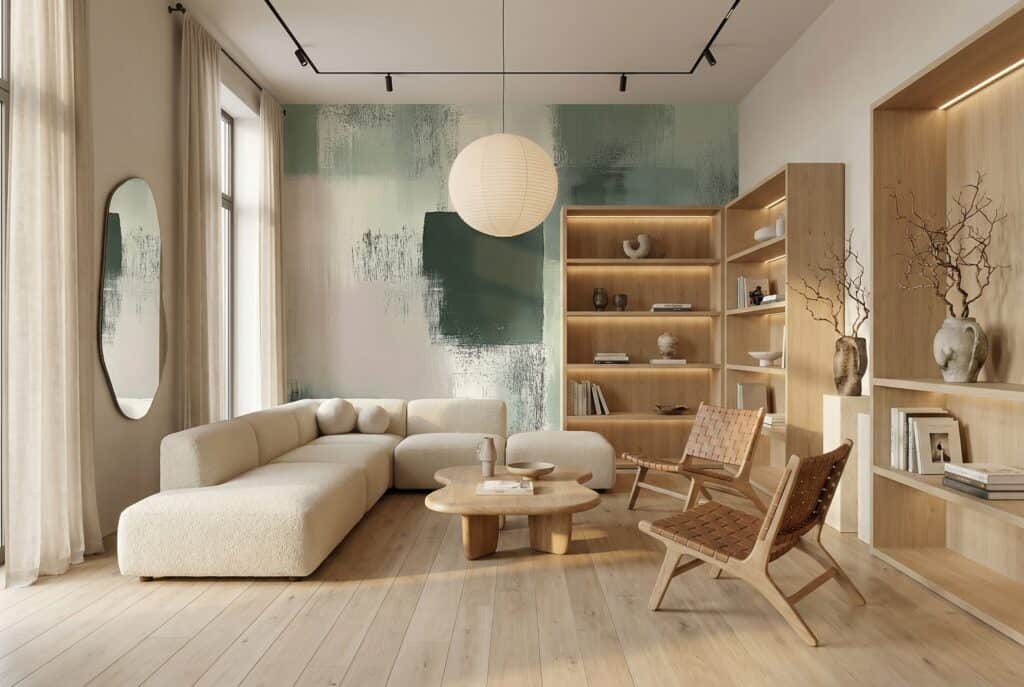
Japandi interiors rely heavily on natural materials. Oak flooring. Linen upholstery. Wool textiles. Clay ceramics. Plaster finishes. These materials create warmth and tactility. However, when they share similar tones, they can blend too seamlessly. Imagine a living room with light wood floors, beige linen curtains, a soft taupe sofa, and a pale wood coffee table. Individually, each element is beautiful. Together, they may lack definition.
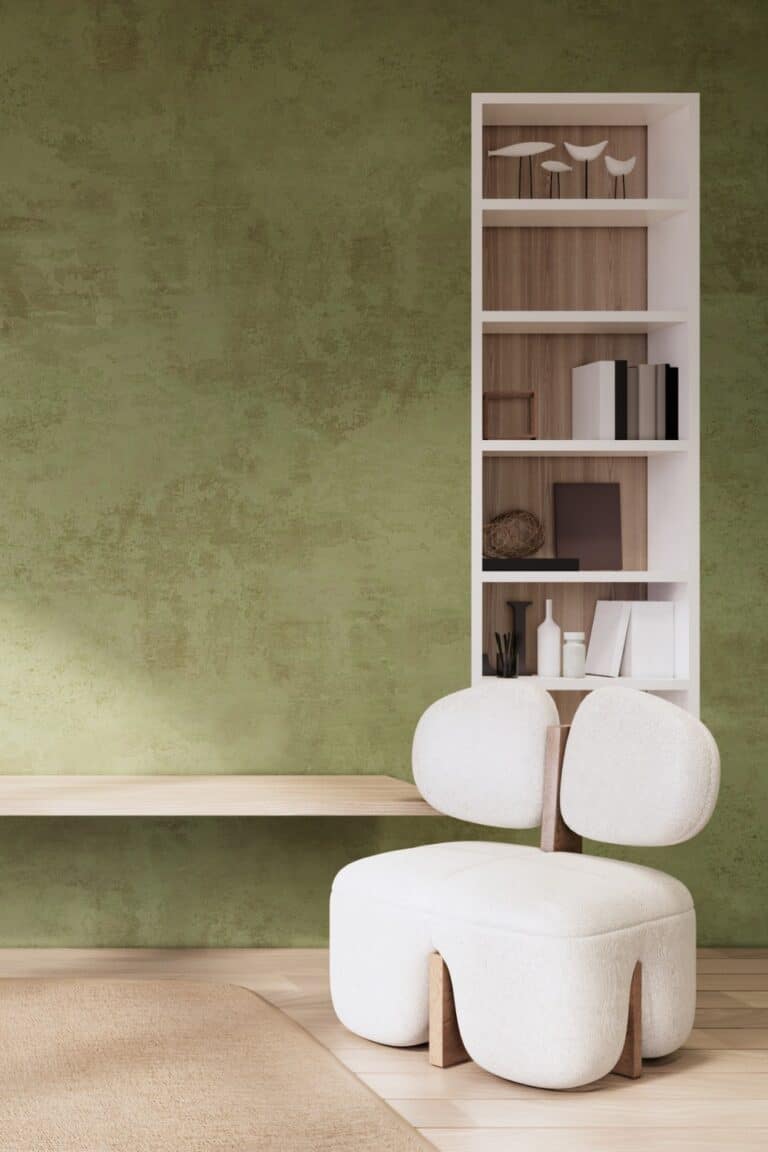
This is where contrast becomes important. Contrast in Japandi is not about colour drama. It is about tonal grounding. A mural in a slightly deeper earthy tone can provide the necessary backdrop for materials to stand out. A muted clay wash behind a light linen sofa makes the fabric appear richer. A soft charcoal stone texture behind oak furniture enhances the warmth of the wood. Without contrast, natural materials can appear flat. With subtle depth behind them, they gain clarity.
The mural acts as a canvas that elevates everything in front of it. It is also worth considering texture. If the room is filled with smooth surfaces, a mural with a subtle textural effect introduces visual tactility without adding physical clutter. Contrast is not conflict. It is balance. When materials are supported by a thoughtful background, the entire room feels more intentional.
#4. Why a Mural Should Anchor, Not Decorate

The most important principle is this. In a Japandi room, a mural should never feel decorative. Decoration implies something added for embellishment. Anchoring implies structural purpose. If a mural feels like artwork pasted onto a wall, it will disrupt the calm. Japandi values cohesion and restraint. Instead, the mural should feel architectural. As though it belongs to the wall rather than sitting on top of it. To achieve this, consider three elements carefully.
Scale. Large-scale compositions maintain serenity. Small, busy patterns fragment the space. A mural should span generously across the wall without obvious repetition. Tone. The colour should sit comfortably within the existing palette. It may be slightly deeper or slightly softer, but it should never introduce an unrelated hue. Movement. Organic brush strokes or subtle gradients feel natural. Hard geometric shapes often feel too graphic for Japandi calm. When a mural anchors rather than decorates, it changes the emotional weight of the room. The space feels settled.
Final Thoughts on One Wall Changes Everything: When a Japandi Room Needs a Mural
A Japandi room rarely needs more objects. It needs presence. If your space feels unfinished, architecturally light, or tonally flat, the solution may not be another accessory. It may be one thoughtfully chosen mural. When used correctly, a mural becomes a structure. It provides focal weight. It enhances natural materials. It anchors rather than decorates. One wall can introduce depth. One wall can create hierarchy. One wall can change everything.
Related Japandi Articles:
- 5 Japandi Spring Colour Palettes to Refresh Your Home for the Season
- How To Create Family-Friendly Japandi Home
- The Role of Negative Space in Japandi Design: A Scientific Perspective
5 Brilliant Ways To Use Wood Wall Panelling In Japandi Style Home
5 Reasons You Should Opt for Wood Slat Panelling for Your Japandi Home
5 Ways to Create A Zen-Like Peaceful Environment in Your Japandi Home
- 5 Steps You Should Consider When Choosing A Bed For Japandi Bedroom
- Why More Craftmanship in Japandi?
- Colours of Japandi Design
Where to Buy Sustainable Japandi Furniture in the UK and Netherlands
One Wall Changes Everything: When a Japandi Room Needs a Mural