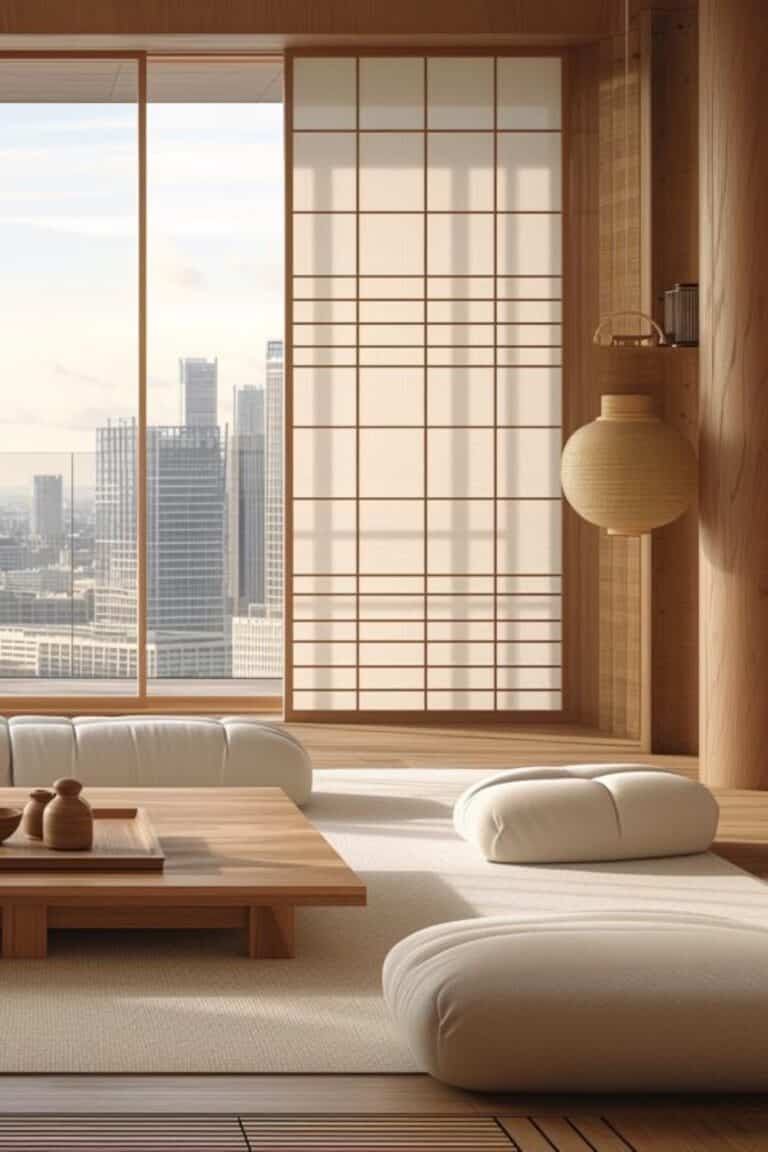
What I actually change in my own home each September, and why none of it involves buying much
An autumn Japandi refresh isn’t a redecoration, and I want to say that clearly before anything else, because I think the phrase “seasonal refresh” makes people assume they need a new sofa or a repaint. What actually needs to happen as the light changes and the evenings draw in is much smaller and much more useful: layering warmth back into rooms that spent summer deliberately pared back.
- How to Create Wabi-Sabi Bedroom
- How Scandinavian Hygge and Japanese Wabi-Sabi Merge in Japandi Homes
- The Wellness Benefits of Igusa You Probably Didn’t Know

Japandi in summer leans light. Bare floors, airy linen, very little on the surfaces, because that’s what suits long, bright days and a home full of children coming in and out with sandy feet. The moment the light starts going flat and gold instead of white, that same paring back reads as cold rather than calm. The fix isn’t more furniture. It’s textiles, warmth, and a handful of small, deliberate changes that carry a family home through the next few months.
What an autumn japandi refresh actually asks you to change
The core shift is textile weight, not colour or furniture. I keep the same palette I use year-round, the sand, clay, and weathered wood tones that hold a Japandi room together, and simply increase what’s carrying that palette. Summer’s fine linen throw becomes a heavier wool or bouclé one. The single cotton cushion cover doubles into a layered pair in a slightly darker tone. It’s the textile equivalent of putting on a jumper rather than repainting the walls, and it’s the single most effective thing I do in my own home every September.
I’d resist the urge to introduce anything that reads as seasonal decoration in the pumpkin-and-tinsel sense. Japandi’s whole appeal is that it doesn’t do costume changes for the calendar. What you’re doing here is closer to what I describe in my piece on how Scandinavian hygge and Japanese wabi-sabi merge in Japandi homes: letting the same home evolve gently with the season rather than announcing the season loudly.
The textiles that do the actual work
If you only change one thing, change the throws and cushions on your main seating. A heavier wool or bouclé throw over the arm of a sofa does more for a room’s felt temperature than almost anything else you could buy this season, and it’s the cheapest change on this list by a wide margin. Swap thinner linen cushion covers for something with more weight and texture, boiled wool, a nubbly weave, a heavier washed cotton, and let one or two sit slightly darker than your summer palette rather than changing the whole scheme.
Bedding does similar work in bedrooms. I move from a single lightweight linen layer to a linen base with a heavier wool or cotton blanket folded at the foot of the bed, ready to pull up without needing to be part of the everyday look. In a family home, I’d add exactly one more throw to a child’s room than you think they need, because a nursery or bedroom that felt right in July often reads several degrees colder by late October, and children feel that more than adults tend to notice.
Lighting the room warmer as the light itself goes flatter
Autumn light is lower, flatter, and considerably less generous than summer’s, and overhead lighting that felt fine in June starts to feel clinical once the evenings draw in early. I switch the balance from ceiling light to lamplight for most of the darker months: a warm-toned bulb, somewhere around 2700K, in a table lamp or floor lamp in every room a family actually spends time in during the evening. Candles do genuine work here too, not as decoration but as a light source, especially at a dining table or in a living room once the sun’s gone by five.
This is one of the smallest changes on this list and the one people underestimate most. A room with the exact same furniture, textiles, and colours reads completely differently under warm lamplight than under a single overhead bulb, and it costs very little to test for yourself with lamps you likely already own.
Where texture matters most underfoot
Floors carry a surprising amount of a room’s seasonal temperature, and this is where I’d spend any actual budget if you have some to spend. A natural fibre rug, something with real depth and a dense weave, does for a floor what a wool throw does for a sofa: it takes the chill out of the room without changing anything about how the space actually functions. I’ve written before about choosing durable materials that carry a family home well through daily use, in my piece on what quiet luxury actually means in a family home, and the same logic holds here: a rug substantial enough to matter, in a material that ages rather than flattens.
Final thoughts on The Autumn Japandi Refresh: Layering Warmth Back Into a Family Home Before the Cold Sets In
An autumn Japandi refresh, done properly, barely shows up as a change at all. It shows up as a room that quietly stops feeling cold the moment the light shifts, through heavier textiles, warmer light, and a rug that earns its place underfoot. Nothing here asks you to buy furniture or repaint a wall. It asks you to notice where a room stopped working for the season it’s actually in, and layer warmth back in exactly there.
If your home needs more than a seasonal layer, and you’d like a full plan built around how your family actually lives through the year, my e-design service is where that conversation starts, and I work with families remotely wherever you’re based.
Related Japandi Articles:
- How Scandinavian Hygge and Japanese Wabi-Sabi Merge in Japandi Homes
- How to Create a Wabi-Sabi Bedroom
- The Secret to Japandi Hallways That Don’t Feel Forgotten
- What Quiet Luxury Actually Means in a Family Home With Muddy Trainers and Lego Underfoot
- 10 Core Principles I Follow When Designing Japandi Spaces As an Interior Designer
- 7 Thoughtful Ways to Make Your Living Room Feel More Japandi
- Tatami in a Home with Children: The Honest Guide
- 5 Elements of Japandi
- Slow Living Starts at Home: The Lifestyle Behind Japandi Design
- How to Create a Family-Friendly Japandi Home

The Autumn Japandi Refresh Layering Warmth Back Into a Family Home Before the Cold Sets In