Last Updated on 23 July 2026 by makingagreenlifebylily
A few words from me on why I made it, what it actually is, and how to bring it into your home
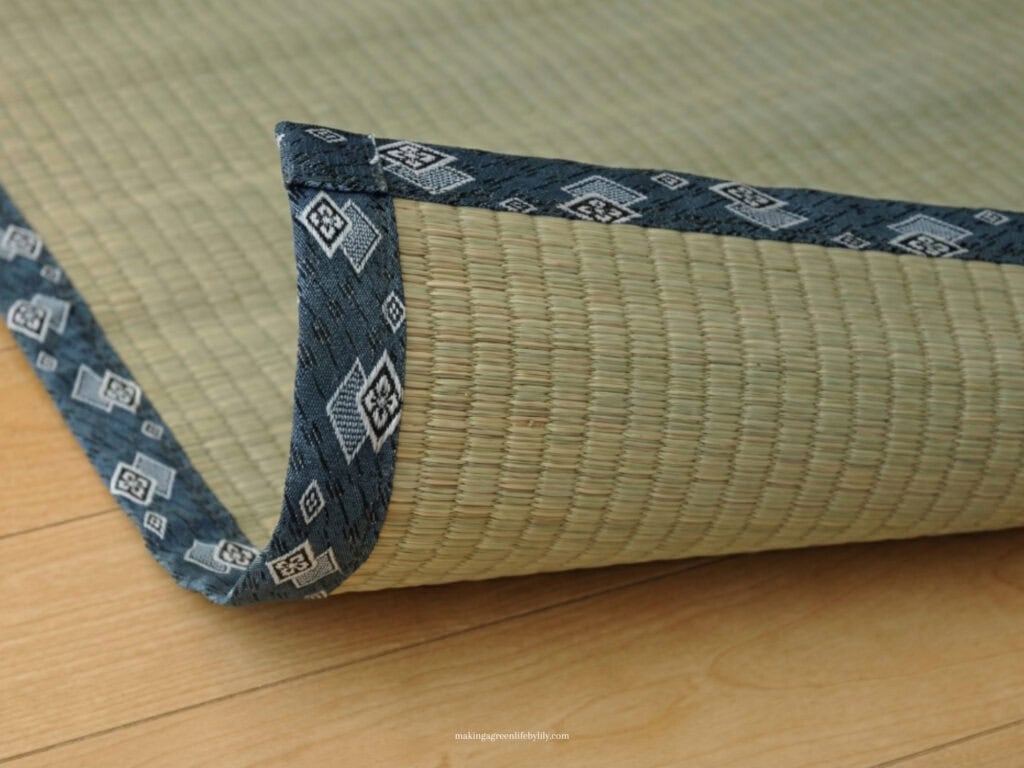
I’ve been writing about igusa and tatami on this blog for the past several weeks because it’s the material I’ve been designing around for the better part of a year. Everything I’ve shared here, the care guides, the layout thinking, the honest comparisons with wool and jute, has been preparation for this: a tatami rug designed specifically for Japandi family homes, made from real igusa, and available now at our store.
I want to tell you about it properly, because I think the story of how something is made and why it was made belongs alongside the thing itself.
Why it took this long
I started thinking seriously about tatami approximately 10 months ago, when I found myself in the same position for the third time in a month: a client with a clear brief (natural material, Japandi palette, family home, children) and no product I could point to with complete confidence.
The igusa rugs available in the UK and European market at that time were either very traditional tatami mats, which don’t always work proportionally in Western domestic spaces, or they were synthetic imitations positioned as tatami-adjacent, which I wouldn’t specify. The gap between what my clients wanted and what existed was consistent and frustrating.
What I wanted to make was a rug that took igusa seriously: real rush grass, properly woven, in dimensions that work in the rooms my clients actually live in, finished in a way that reads as Japandi rather than purely traditional Japanese. That meant working with people who understood the material and were willing to make something new with it rather than something standard. It took time to find the right collaboration, to get the proportions right, to test how the construction held up to the kind of use family homes actually demand.
The rug that’s now available at japandibymaglbl.com is the result of that process. It’s not a mass-market product. It’s the thing I wanted to be able to recommend a year ago and couldn’t.
What the tatami rug actually is
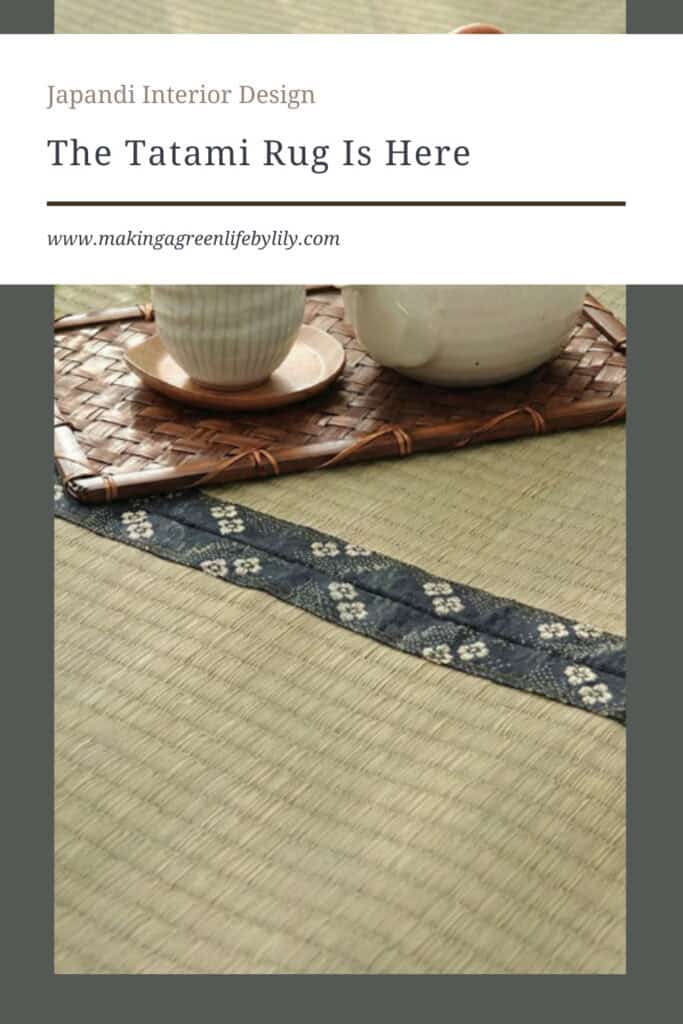
The rug is made from igusa, the Japanese rush grass that gives traditional tatami its particular scent, texture, and visual quality. The weave is tight and directional, with the characteristic surface grain that changes appearance subtly as the light moves through the day. Underfoot, it feels firm and slightly resistant, with a coolness in warmer months and a presence, a sense of something substantial, that pile rugs don’t offer.
New igusa is pale, with a faint greenish tone and a scent that I can only describe as a meadow in early summer, grassy and clean and faintly sweet. Over the first year, it shifts to a warm honey gold as the natural oils in the grass settle, and the surface responds to light and use. The scent softens but doesn’t disappear entirely. A room with a tatami rug in it always smells slightly different from a room without one, in the best possible way.
The dimensions are designed for Japandi interiors: proportions that work under a low coffee table, in the centre of a family living room, or in a child’s bedroom without overwhelming the space. I’ve written about placement in detail in my living room layout post, and the sizing decisions I made were informed directly by years of specifying floor materials in family homes.
The edge finish is clean and considered, in keeping with the understated quality that Japandi design asks for. Nothing decorative. Nothing that competes with the material itself.
How to bring it into your home
The tatami rug works in living rooms, dining areas, bedrooms, and children’s rooms. It does not belong near consistently wet areas or in spaces with sustained underfloor heating running at high temperatures. Everything else, it can manage.
Place it where the floor is the space, not just the surface beneath the furniture. A centred rug in a cleared area, with low furniture arranged around it rather than on top of it, is the placement that gets the most from what igusa offers acoustically, texturally, and visually.
For care: vacuum with the grain on low suction, blot spills immediately, avoid steam cleaning, and keep the area ventilated. I’ve written the full care guide in my tatami care post if you want the complete picture before you buy.
For family homes with children: igusa holds up to daily family use when you understand how it behaves. My complete guide to tatami in a home with children covers spill response, placement for kids’ rooms, and the sensory qualities that make igusa genuinely suited to spaces where children live.
The rug is available now. You can see it, read more about how it’s made, and order at japandibymaglbl.com. I’d love to hear where it ends up.
Final thoughts on The Tatami Rug Is Here: A Quiet Introduction to What I’ve Made
Making a product is not something I’ve done lightly or quickly. I’m a designer, not a manufacturer by instinct, and I’ve spent a long time being selective about what I put my name on. The tatami rug is something I can stand behind completely: the material is real, the construction is considered, and the intention behind it is exactly what it appears to be. A Japandi rug for homes that value natural materials, honest ageing, and calm, functional beauty.
Thank you for reading along while I’ve been building toward this. If you’ve been following the tatami series from the beginning, you’ll know this has been a while in the making. If you’re discovering it now, welcome, and I hope this is the beginning of a long time together.
Related Japandi Articles:
- Tatami in a Home with Children: The Honest Guide
- Living Room with Tatami Flooring: Five Layouts
- How to Care for Tatami: Cleaning, Freshness and What to Never Do
- Tatami vs Traditional Rugs: The Side-by-Side
- What Is Tatami? A Designer’s Answer for Modern Homes
- 5 Benefits of Using a Tatami Rug in Your Home
- What a Japandi Rug Actually Does for a Room
- The Wellness Benefits of Igusa You Probably Didn’t Know
The Tatami Rug Is Here: A Quiet Introduction to What I’ve Made